Why AI Video Ignores Your Product Reference (and How to Stop It)
The model's prior beats the reference unless the distinguishing feature is stated where the object is first named; never name the brand.
OMNI LabsUpdated
Key takeaways
Naming a brand gives diffusion models an immediate hook into internal priors, overriding external reference packs.
Prompts must describe items generically as 'the object' or 'the product' without using words like logo or wordmark.
Distinguishing geometry must appear where the object is first named; describing an arched handle 1,800 characters late yields a tote.
On Magnific Seedance 2.5 at 1080p, demanding text copied letter-for-letter from @Image1 held printed words without naming brands.
MiniMax H3 re-derives every pixel it renders; surviving product typography belongs on LTX 2.5, start plates, or Remotion.
The brand prior trap: why reference images get overridden
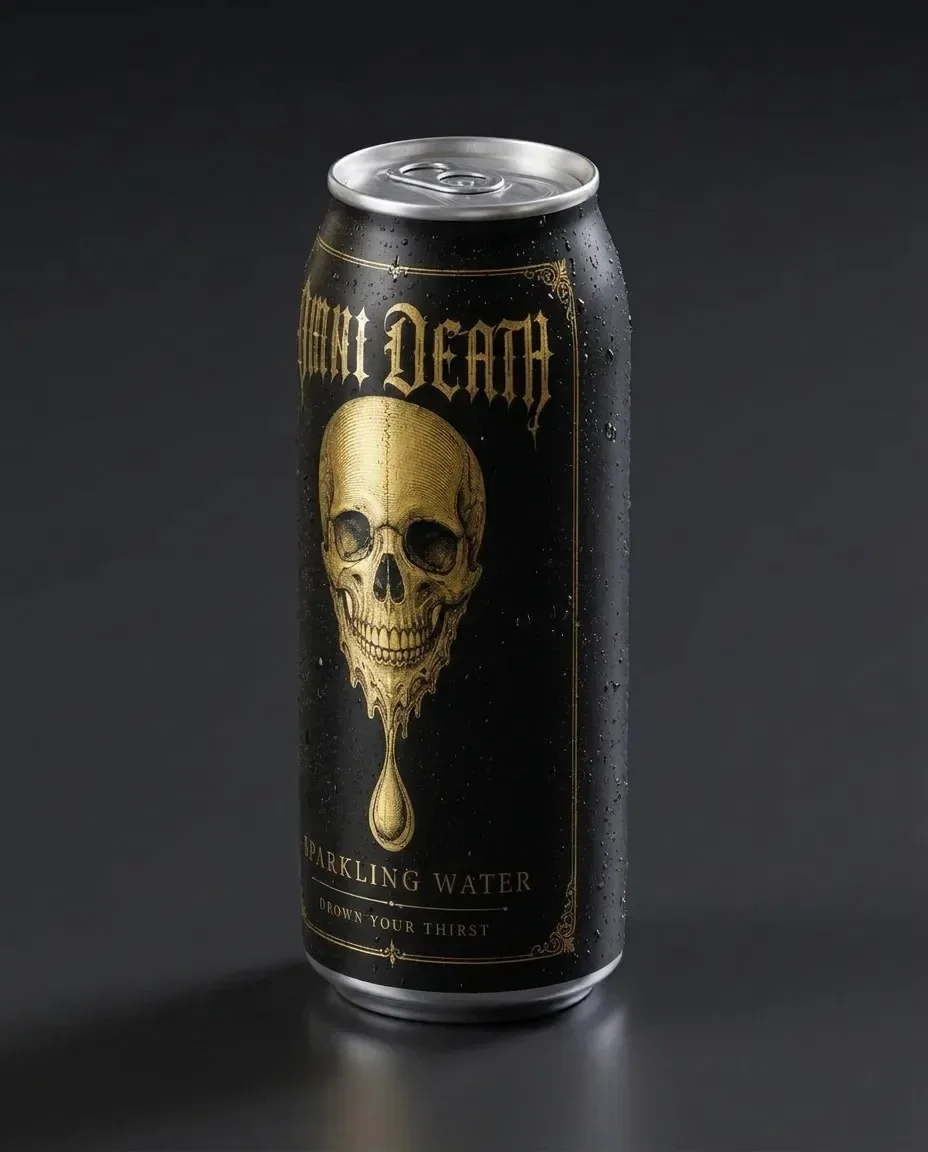
Flow Ingredients drifted to the real stock version of a can in every run of a fictional-product test. Seven references at 12 credits for 8 seconds, four references at 15 credits for 10 seconds, and seven with timed beats at 15 credits all failed the identity. One run also spawned graphics onto a blank can mid-shot.
Generative video diffusion backbones do not ingest visual references as immutable photographic plates. Instead, multi-reference conditioning engines project image tokens into cross-attention layers where they actively compete against pre-trained semantic weights. During benchmarking on Google Flow Ingredients, every test pass using fictional beverage packaging degraded into generic commercial stock imagery. Submitting seven references at 12 credits for 8 seconds, four references at 15 credits for 10 seconds, and seven references with timed beats at 15 credits consistently failed identity retention. In one test run, the attention mechanism abruptly manifested arbitrary graphic patterns across an unprinted container mid-shot.
The same seven-frame pack through fal's Seedance 2.0 mini reference-to-video (about $1) held our exact artwork, a real spin and a real burst. That was the 2.0 family, and we have not repeated the test on 2.5 with product artwork.
Cross-platform consistency varies substantially across model generations. Routing the identical seven-frame reference pack through fal's Seedance 2.0 mini reference-to-video at an operational cost of about $1 preserved our exact package artwork through dynamic rotation and liquid burst dynamics. While that test proved the efficacy of the 2.0 family, production pipelines require disciplined syntax when transitioning across newer architectures.
Prompt syntax: eliminating brand nouns and anchoring geometry early
The winning prompt contained zero brand words: no brand name, no 'logo', no 'wordmark', not even 'can'. Only 'the object' or 'the product'. Naming the brand gave the model a hook into its own prior, and that prior overrode the reference. The rule is to scan the prompt for brand words before anything is sent.
When a prompt includes commercial brand names or colloquial product categories, the text encoder activates heavily weighted training priors that drown out reference conditioning latents. Prompts that achieved complete visual compliance scrubbed all corporate terminology, omitting brand titles, logo identifiers, and wordmark labels entirely. Referring strictly to 'the object' or 'the product' forces cross-attention blocks to extract physical geometry, color distributions, and surface artwork directly from reference images. Studio protocol requires scanning all prompt copy for brand nouns before dispatching inference requests.
Handbag reference: a correctly bound reference still rendered as a two-handled tote because the distinguishing arched handle was described about 1,800 characters after the object was first named. Stating the geometry where the object is named and the scale against the prior ('compact handbag, NOT a tote') fixed it.
Positional syntax within prompt strings dictates visual precedence. In luxury accessory testing, an accurately linked product still generated as a standard two-handled tote because the custom arched handle appeared approximately 1,800 characters downstream from the initial object declaration. When distinguishing structural geometry is delayed, early tokens anchor to default category prototypes. Declaring physical geometry immediately at the point of naming, paired with explicit negative classification—specifying a 'compact handbag, NOT a tote'—eliminated structural deformation.
Letter-for-letter text replication and rotation stabilization
On Magnific's Seedance 2.5 on 12 October 2026, a hand-thrown fictional bottle survived image-to-video using the approved hero frame as the start frame plus two product angle images. Kling 2.6, Kling 3.0 and Veo Lite all deformed the same bottle.
Maintaining structural integrity across dynamic motion requires strict keyframe anchoring. In tests conducted on Magnific's Seedance 2.5 on 12 October 2026, an airborne fictional bottle completed an image-to-video pass without distortion by combining an approved hero frame as the starting keyframe alongside two secondary angle references. Competing models including Kling 2.6, Kling 3.0, and Veo Lite deformed container geometry.
Multi-reference product conditioning performance and typographic retention · measured 12 Oct 2026
Misspelled at 480p; letter-for-letter held at 1080p
Kling 2.6 / 3.0 / Veo Lite
Hero start frame plus two product angle images
Deformed container geometry across frames
Structural collapse across surface text
MiniMax H3
Video diffusion with text conditioning
Re-derives all pixels; fails label locking
Unsolved; route typography to LTX or Remotion
Measured on 2026-10-12; prompts must describe items as 'the object' with zero brand words.
At 480p the printed word on that bottle came back misspelled. One added line fixed it at 1080p without naming the brand: 'The word printed on the front of the bottle is copied letter-for-letter from @Image1, in the same thin gold capitals, and never changes.'
Raster resolution sets a hard floor on typographic fidelity. At 480p preview resolution, packaging text degraded into illegible glyphs. Elevating the render to 1080p while appending an affirmative syntactic constraint resolved letterform clarity without mentioning brand names: instructing that 'The word printed on the front of the bottle is copied letter-for-letter from @Image1, in the same thin gold capitals, and never changes' locked typographic reproduction.
Managing physical rotations, burners, and migrating monograms
A spinning product is redrawn and drifts. The prompt that held the bottle upright used timestamped beats and 'stays UPRIGHT and does not spin'.
Rotational kinematics trigger continuous pixel re-synthesis in diffusion decoders. When packaging revolves in free space, unseen surface planes force models to invent missing textures, inevitably degrading core logos. To maintain crisp branding across extended commercial takes, prompts utilize beat-synchronized timing while enforcing rotational locks, directing that the product 'stays UPRIGHT and does not spin'.
On Kling 2.5 a concept balloon with no burner acquired a pulsing burner flame in its throat. A negative list ('burner, flame, fire') was weak. What worked was describing the throat as a closed dark point that stays unlit and constant.
Concept vehicles and industrial prototypes suffer similar prior contamination. In Kling 2.5, a sleek aircraft designed without an open burner repeatedly generated internal combustion flames. Standard negative prompt arrays failed to suppress ignition. The solution required affirmative physical modeling, defining the opening as a closed dark point that remains unlit and constant throughout the take.
An element's secondary mark migrates to whatever side is visible. A monogram that exists only on the back of a product appeared on the side panel in a three-quarter portrait, because the back was out of frame.
Spatial attribution in latent attention mechanisms remains fluid across hidden facets. If a reference set features an iconic monogram situated exclusively on the rear panel of a handbag, rotating the object to a three-quarter perspective causes the model to transplant that monogram onto the visible side flank. Attention mechanisms prioritize rendering recognized identity marks over respecting geometric occlusion.
Printed typography on H3 is not solved. H3 re-derives every pixel it renders, so a wordmark that must survive belongs on LTX 2.5, on a rail that keeps a start plate, or in Remotion. Further prompt iterations on H3 for that class of shot were wasted.
Understanding the mathematical constraints of individual diffusion models prevents futile engineering cycles. MiniMax H3 re-derives every pixel across its generative trajectory rather than maintaining a rigid persistent canvas. Consequently, minute packaging wordmarks inevitably distort during motion. When commercial deliverables mandate uncompromised label fidelity, production pipelines route shots to LTX 2.5, deploy keyframe-locked start plates, or composite typography in Remotion.