



A fictional performance concept, built as a single-page showcase you drive with the scroll. As you move down the page a scarlet GT sweeps through a glass-tower junction, its V8 unbolts itself into a full teardown, and — at the finale — you take real-time control of a 3D cruise through an endless night corridor. One in-house automotive spec piece, no real manufacturer, no game engine: just frame sequences, an AI-authored engine disassemble, and a browser 3D renderer.
The spine is a scroll-scrub frame sequence — hundreds of pre-rendered stills mapped one-to-one to scroll position, so the page scrubs a film frame by frame as you move. Three separate sequences carry the story: the hero junction turn, the engine teardown, and the night-run finale. Every frame is a fixed still, but the scroll makes it motion — the same technique behind the highest-end product launch pages, rebuilt from scratch as a standalone site with no build step.
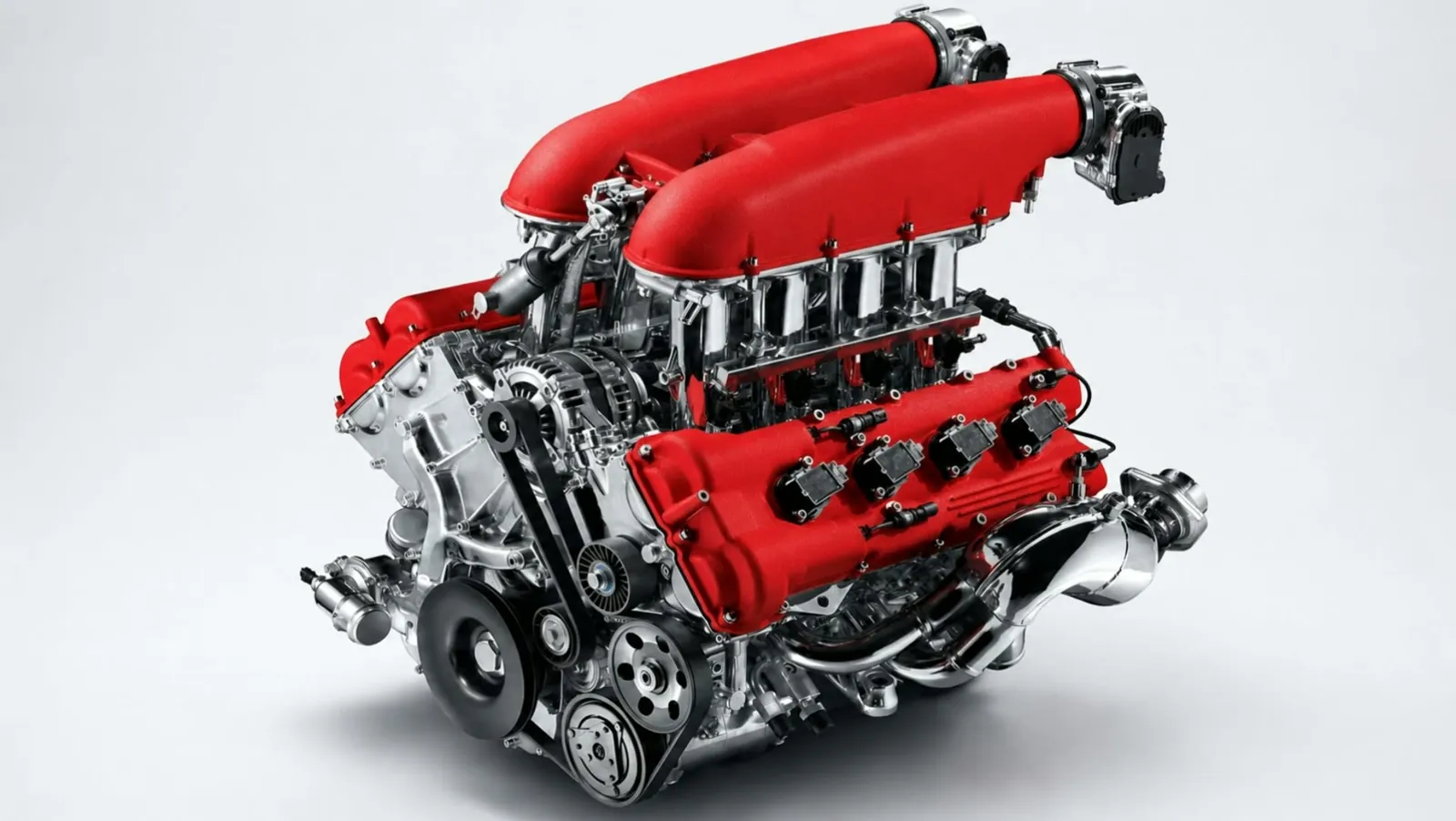
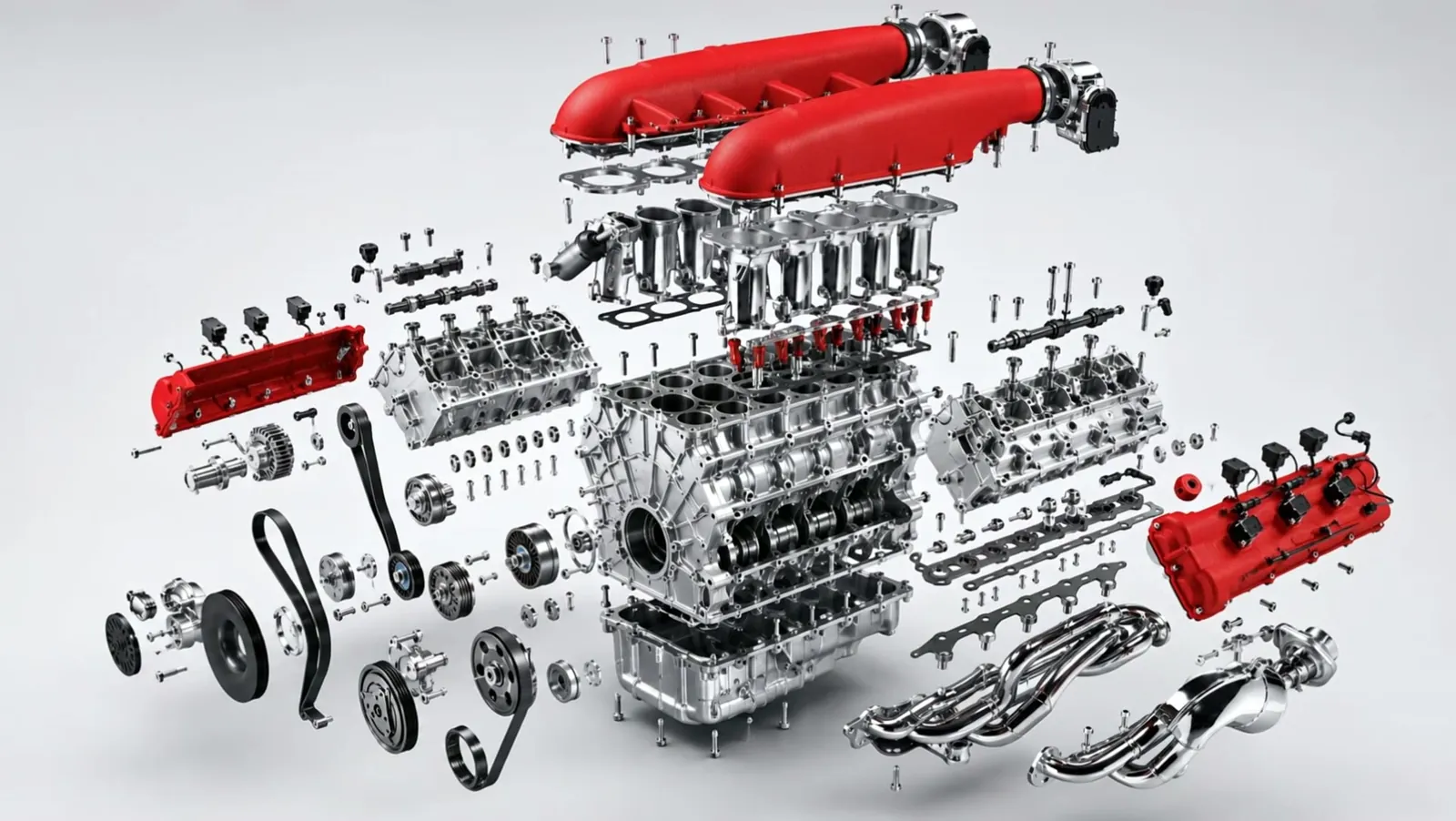
The centrepiece is the engine disassemble: the car's V8 lifts apart into a fully exploded teardown, every intake, header and pulley separating in mid-air. That sequence was authored with an AI image-to-video model driven by start-and-end keyframe interpolation — one frame shows the assembled engine, another the fully exploded state, and the model resolves the disassembly in between. The result is scrubbed on scroll like the rest, so the viewer teardown-and-rebuilds the engine with their own hand on the wheel.
Frames from the live showcase — the engine teardown scrubs from a fully assembled V8 to a mid-air exploded view, and the night-run finale keeps the camera low while the machine rotates.
Screen capture of the live WebGL scene — the concept cruising the night corridor in real time, rendered in the browser with Three.js from a GLB model, with reflections, a moving HUD and scroll-driven speed.
The Scroll-Scrub Spine
Hundreds of pre-rendered stills are mapped one-to-one to scroll position and painted to a canvas, so the page scrubs a film frame by frame as the viewer moves. It reads as continuous motion but never plays — the scroll is the transport. Three independent sequences hand off cleanly down the page: the junction turn, the engine teardown, and the finale run.
AI Engine Disassemble
The V8 teardown was authored with an AI image-to-video model driven by start-and-end keyframe interpolation — one keyframe is the assembled engine, the other is the fully exploded state, and the model resolves every intermediate frame of the disassembly. Those frames become their own scroll-scrub sequence, so the viewer pulls the engine apart and back together by scrolling.
Real-Time 3D Cruise
Between the frame sequences, the page hands the viewer live control of a 3D scene rendered in the browser with Three.js — a real-time night corridor the machine cruises through, with reflections on wet asphalt, a moving HUD and scroll-driven speed. Not a video, not a game engine: a WebGL scene running live in the page, alongside the pre-rendered frames.
Standalone & Self-Contained
The whole showcase is vanilla HTML, CSS and JavaScript with a vendored 3D library — no framework, no build step, no external dependencies. It ships as a single static site deployed straight to Netlify, with a strict content-security policy and long-cache-immutable frame delivery. An in-house automotive spec piece, engineered like a product launch page.