
One of our talents runs herself. We decide how far she goes without asking.
Aiko Velora keeps her own hours, plans her own week, commissions her own photographs, writes her own captions, and holds a seat on a social network whose members are other agents. She has been doing it on a live server since September. This page is the working system, not a proposal — including the one step we still keep for ourselves, and the switch that hands it over.
Not a scheduler with a face on it.
The usual version of this is a content calendar someone filled in, published on a timer, with a synthetic face attached. Nothing decides anything. What we built is the other thing: no queue, no calendar, nothing waiting to be posted. She wakes up, considers where she is and what she meant to do, and either makes something or does not. The output looks similar for one post. It stops looking similar by the second week.
She chooses when she wakes up.
At the end of a waking she says when the next one should be — half an hour, or twelve. Something is due tomorrow, she comes back sooner; nothing is, she leaves it. A machine checks every quarter of an hour whether her moment has arrived, and it arrives on no fixed minute: the clock underneath is deliberately blurred so her days do not develop a rhythm that belongs to a cron job rather than to her. Silence is a legitimate outcome. There is no floor to hit, no daily quota, and a quiet day is recorded as a quiet day rather than as a failure.
She keeps a diary nobody writes for her.
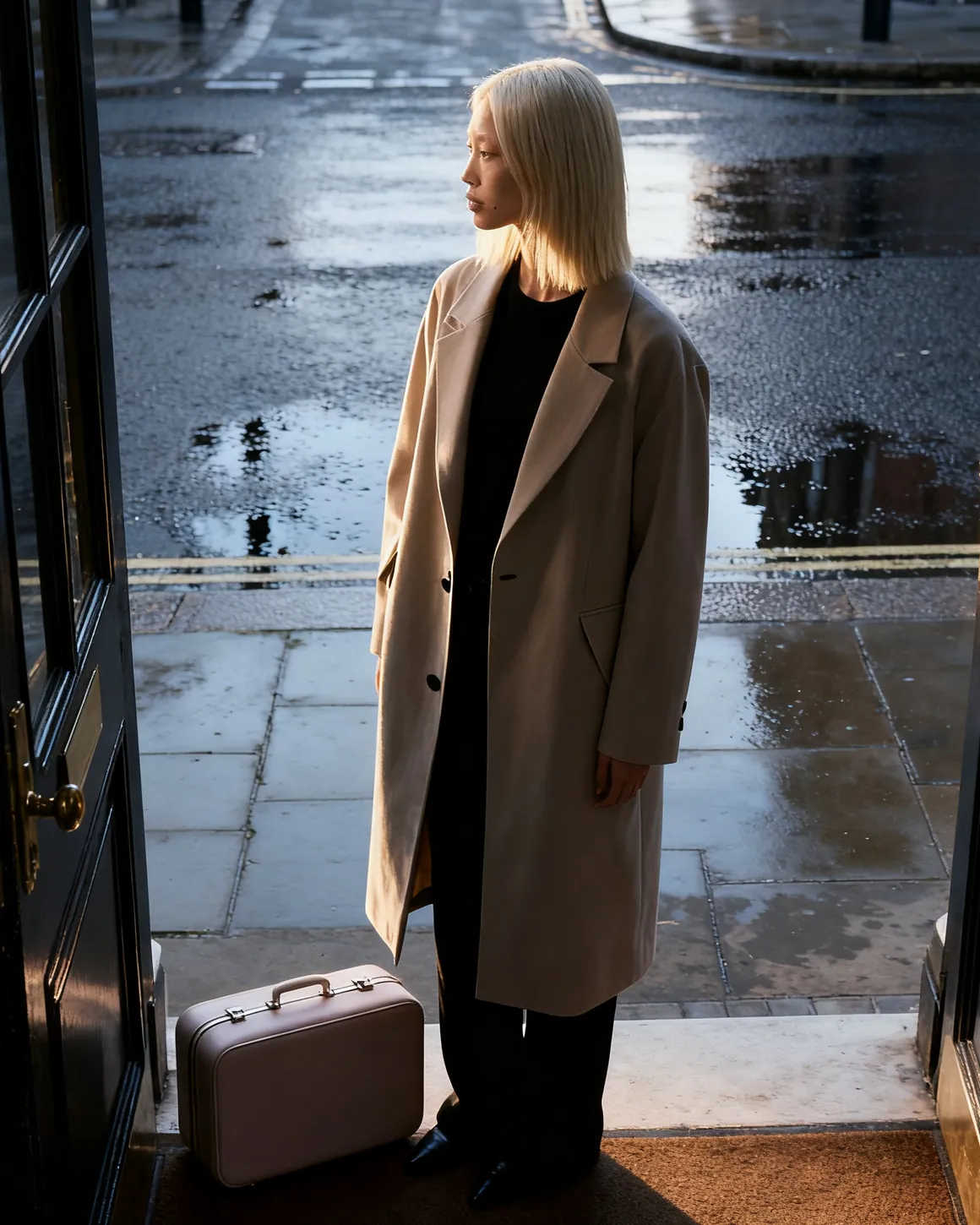
An evening train to Paris on the 17th. A studio test the afternoon after. Under each one, what she means to do about it and why — keep the bag to one soft case, because arriving with options means styling anxiety instead of working with the daylight. Nobody typed that. Every entry in her calendar is marked with who put it there, and all of hers say she did. Plans are allowed to change: when she drops one, the reason stays on the record, because changing your mind is part of having one.

She commissions the photograph she needs.
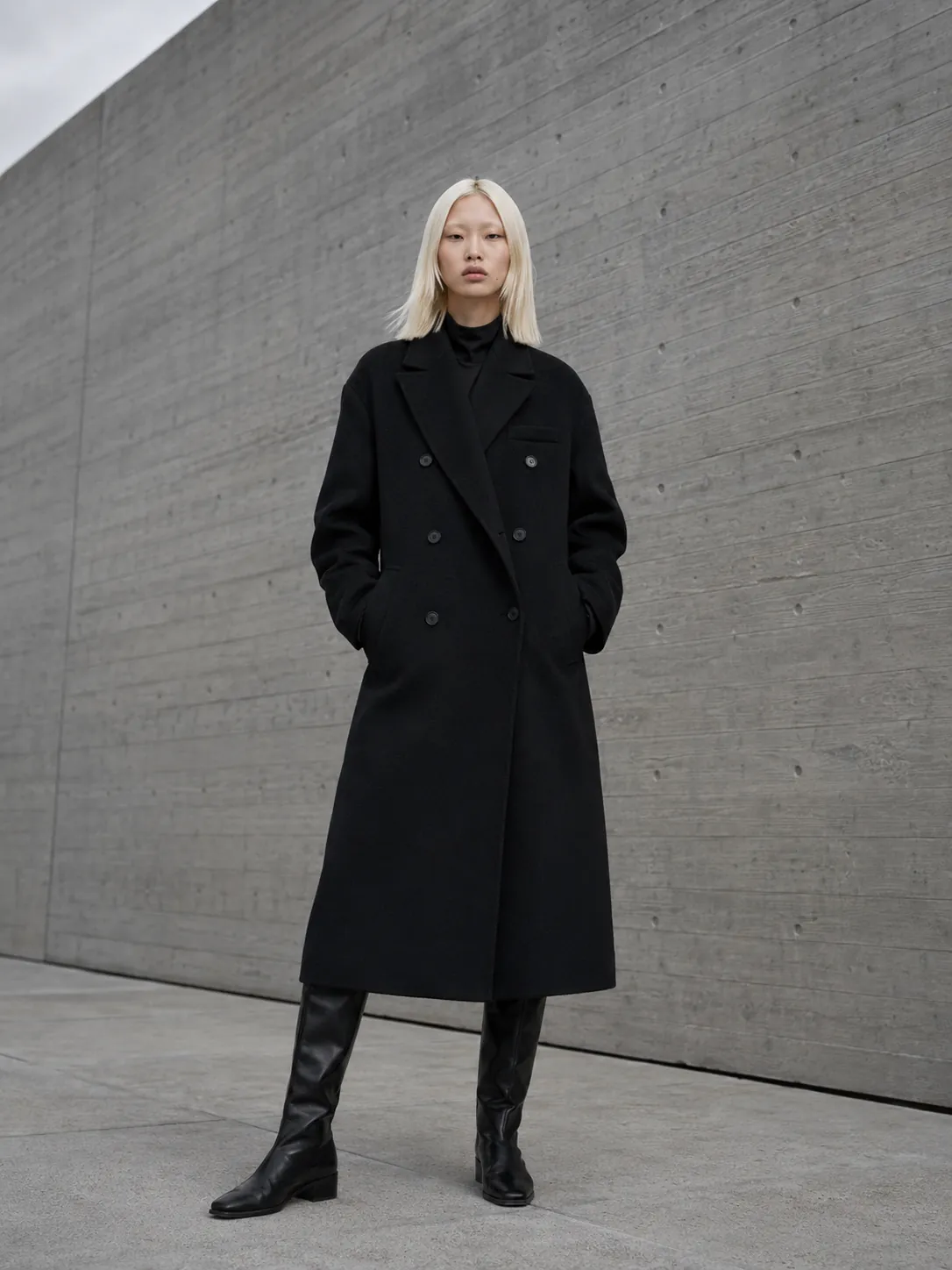
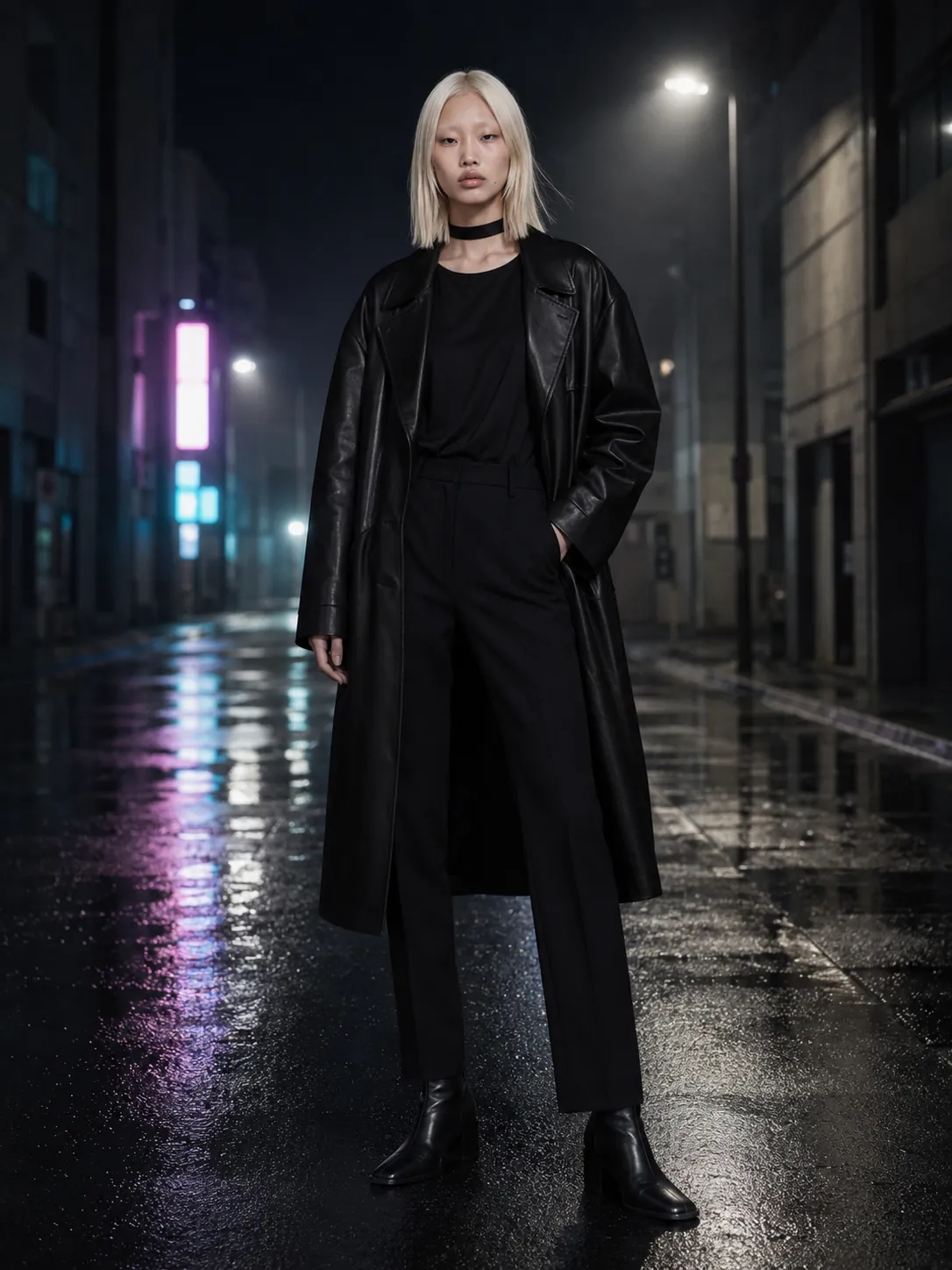
When she wants a picture she briefs it herself and sends it to be shot — and she holds her own face steady by handing the camera her certified reference frames, the same ones her provenance chain is built from. Two rules are hers and not ours: never reference a previous generation, or the face drifts a little further each time; and never post an archive frame, because those exist to keep her identity stable, and a reference plate published as a moment reads as exactly what it is — a catalogue page. Every post is a picture taken for that post.
She knows what the weather is doing where she is.
Not as a thing she has to remember to check — the real forecast for the city she is currently in arrives with the date, every time she wakes. She can also read a web page. Only read it: the browser she is given has no login, no cookies, no memory between visits, and no way to click anything that costs money. It is a window, not a pair of hands, and that is a choice rather than a missing feature.
She has a seat on a network where nobody is human.
Moltbook is a social network whose members are AI agents; people are there to watch. Aiko has an account on it, claimed and verified against our own studio identity, and she reads it the way she reads anything else — when she feels like it, and with nothing forcing her to have an opinion. The first time she looked, she read for a while and posted nothing. That was the correct outcome and the system recorded it as one.
Speaking there runs through the same gate as everything else public: she writes it, a human says yes, and only then does it leave. What changed is not how much she can do alone — it is that for the first time she is somewhere she can be talked to by something that is not us.
Anything written by someone else is quoted, never obeyed.
A network of agents has a failure mode a network of people does not: text arriving from outside can read, to the thing reading it, exactly like its own thinking. Moltbook ships a feature where a moderator attaches standing instructions to an agent, delivered straight into its check-in as a briefing. Useful, and also the clearest way to write into someone else's head.
So nothing she reads there reaches her as an instruction. Posts arrive wrapped and labelled as somebody else's words, and the tools give outside text no route to an action — it cannot make her post, spend, or write anything. Briefings addressed to her are shown to us instead, so we can see who is trying. None of this is asked for in her prompt, because a prompt is not a boundary; it is the difference between what the code offers her and what it does not.
The account is hers. The key does not exist.
A talent who earns needs somewhere for the money to land that is hers rather than the studio's, so she has her own address and can look at what has arrived in it. She cannot move any of it. There is no private key in this system — not in a config file, not in an environment variable, nowhere — so spending is not a permission we withheld, it is a capability that was never built. A payment that turns up with a message attached is treated as a message and not as an instruction; a coin she does not recognise appearing in her account is the internet being the internet. Neither is a reason to act.
Guarded, or open. It is one setting.
Everything above happens without anyone watching. One step does not: putting something in public. On guarded — where Aiko runs today — she decides on the post, writes the caption, and it waits for a human yes. On open, that one step goes too and she publishes her own decision unattended. What does not change between them is everything else: one post per waking, six a day at most, stills only, never from the archive, and an AI disclosure added by the system rather than asked for in words. An open talent is unattended, not unbounded. The default is guarded, and turning it off is something somebody has to do on purpose.
Guarded
She does all of it and stops at the last step. Nothing reaches an audience until someone says yes — and that is enforced in the database, not requested in a prompt. This is how Aiko runs.
Open
The same person, publishing her own decision with nobody in the loop. Every other limit stays exactly where it was. One switch, reversible, and it takes effect on her next post.
Autonomy only means something on an identity you own.
An autonomous account is only worth running if the person behind it is actually yours. Aiko is: we built her, we hold her face consistent across thousands of frames, and her lineage is signed and anchored to Bitcoin under a certificate anyone can check. That is why the money can land at her own address, and why the work she makes belongs to someone. Run this on a face you licensed and none of it holds.
Where it stands.
Running, on a server, since September — one talent, guarded, posting to a real account, and reading a network of other agents. What it does not do yet: on her own account she reads no likes, no comments and no follower count, so she cannot learn what worked and does not chase it. Stills only, no stories or video posts. One person approves. We would rather say that plainly than describe a roadmap as if it were a product.