

We have started planning how to build bodies. Everything else here ships as pixels.
OMNI Labs builds synthetic people — identities we own, hold consistent across thousands of frames, and certify. We are now working out what it would take to give one of them a physical body. This page is the thinking, not the result: it is early, nothing is built yet, and it is not for sale.
An embodied persona.
A synthetic identity we built, own, and certified — now in a body. Not a machine wearing a face, and not an assistant with a speaker in it. The same person who exists across a talent roster and a signed provenance chain, in a form you can be in a room with: a companion rather than a product demonstration.
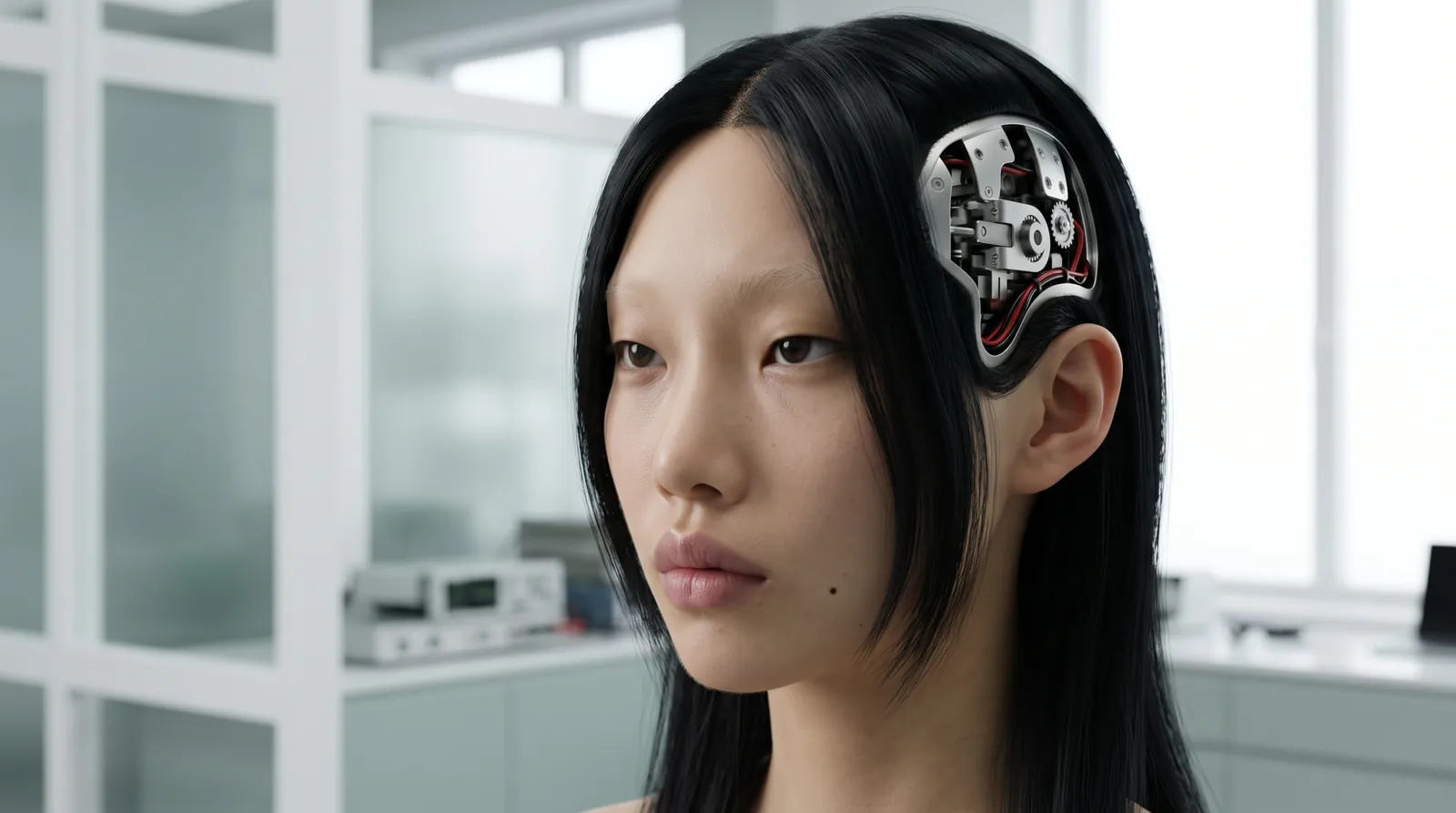
A body is built in layers, and each one can be wrong on its own.
Structure carries the weight. Actuation decides how it moves, and whether the movement reads as intent or as a machine completing a cycle. The outermost layer is the one people actually meet — and it is the one where being close to right is worse than being obviously artificial. We are working through them in order, because a convincing surface over the wrong motion fools nobody.
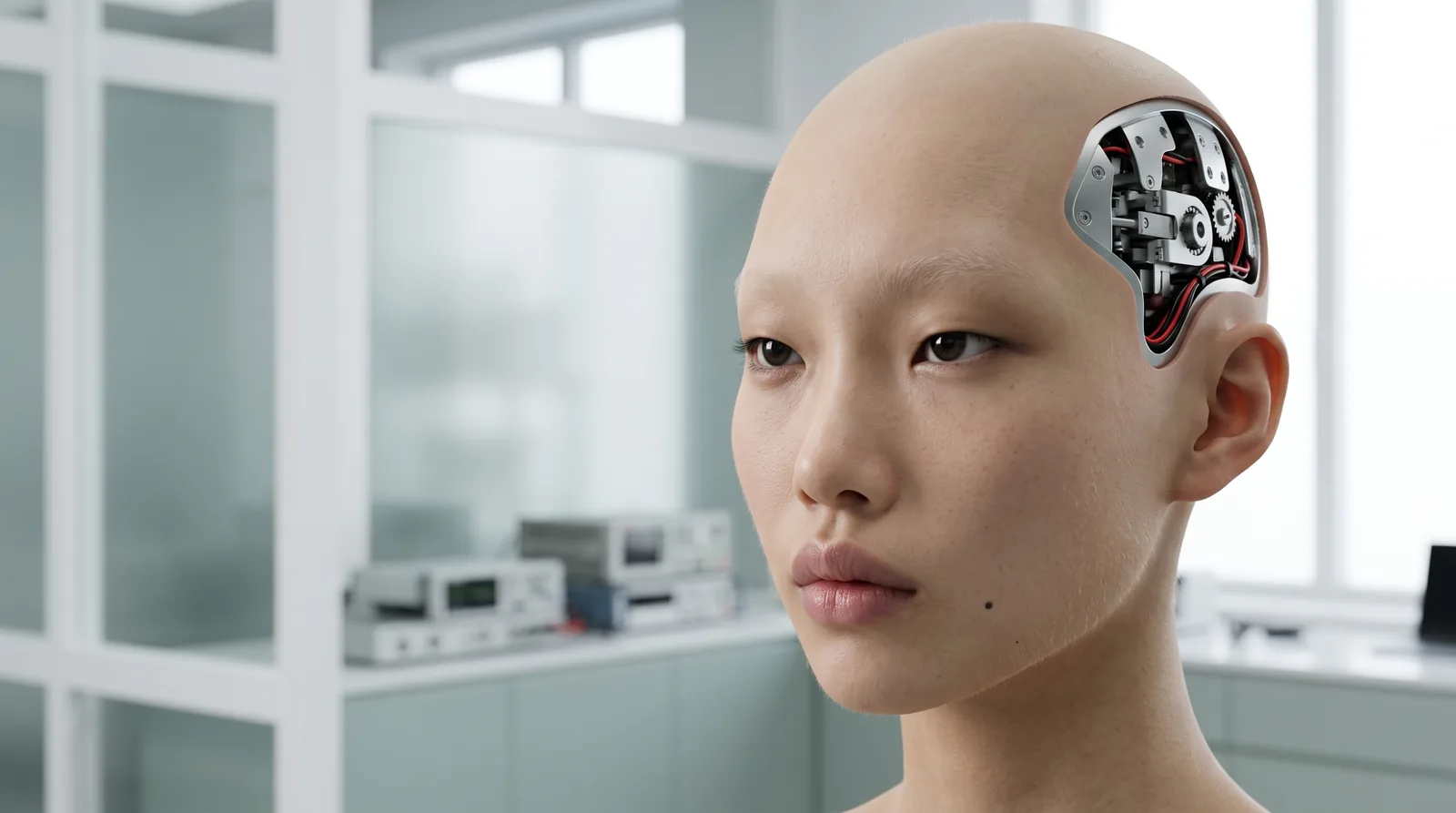
Standing still is the easy part.
A body at rest can be photographed into looking finished. The difficulty starts when it speaks: the hands have to arrive slightly before the words, the gaze has to break and return instead of staring, the head has to carry the sentence. Get the timing wrong by a fraction and the whole thing reads as a puppet — which is why we treat motion as the hard problem and the surface as the easy one, not the other way round.
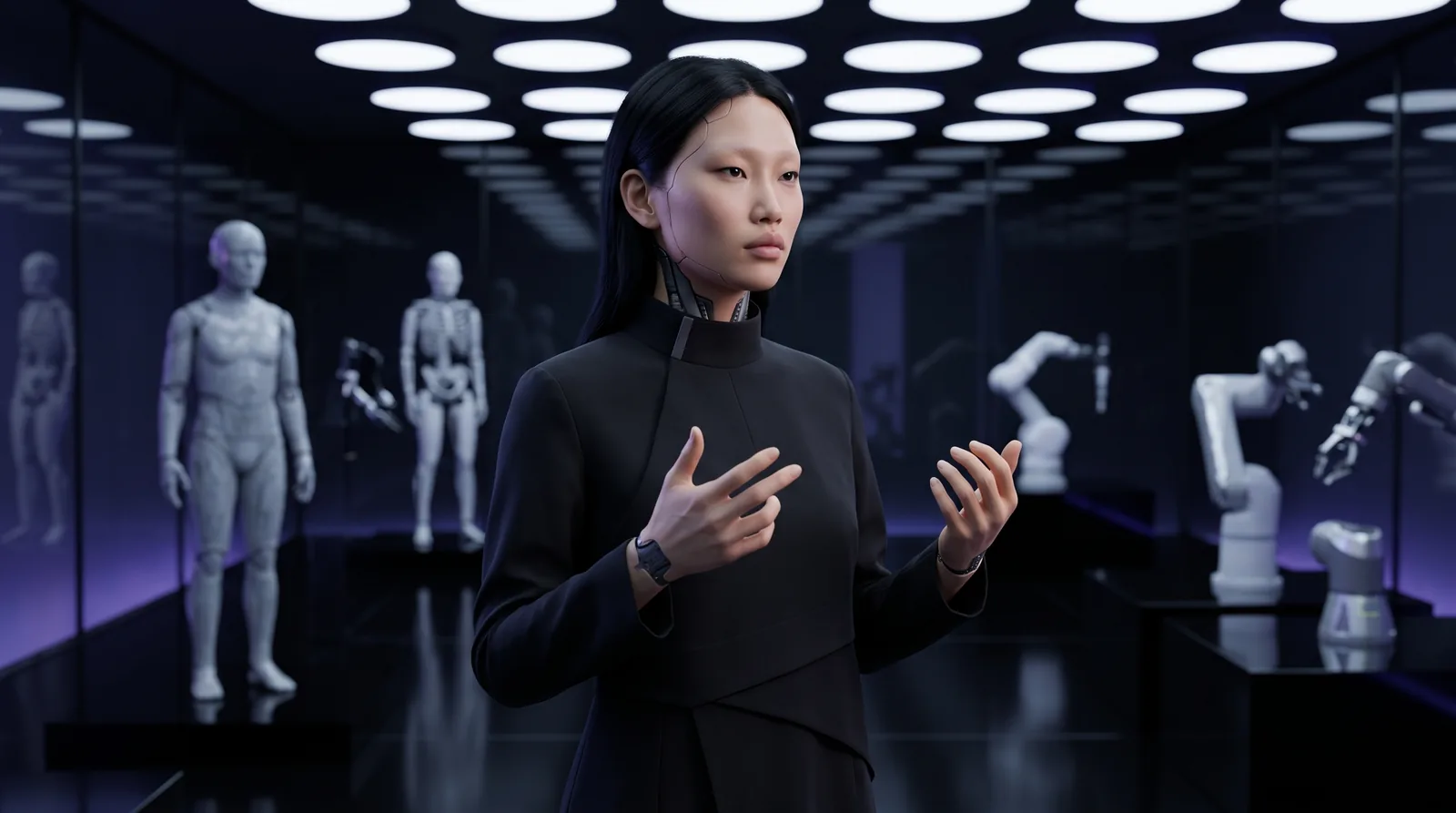
One unit, on paper.
The first is Japanese, early twenties, and designed as a companion — built to be present with someone rather than to perform tasks for them. That is the entire specification we are sharing. There is no name here, no photograph, and no date.
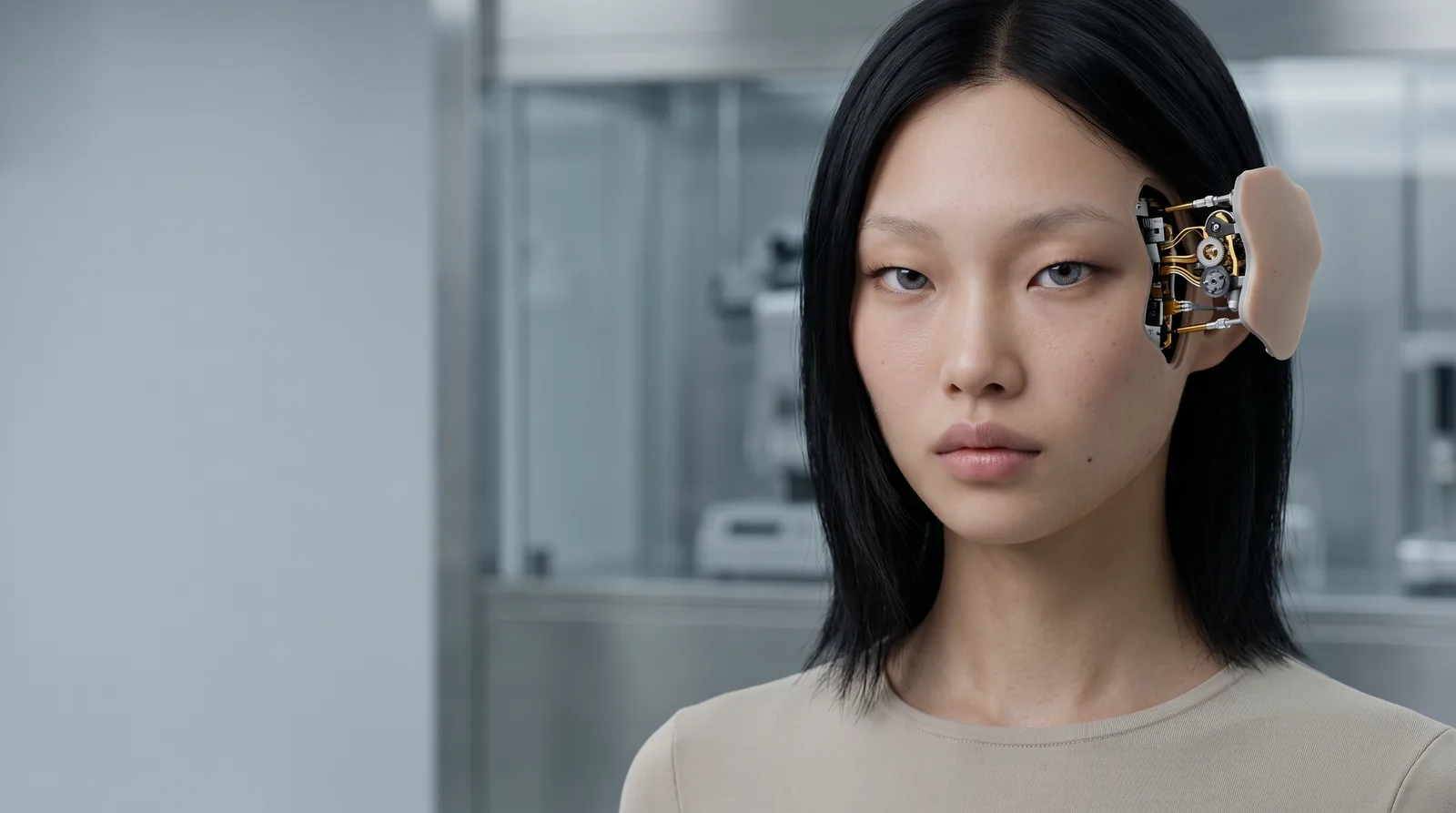
The body is the same problem, one layer down.
We already build synthetic people end to end — we define the identity, hold it consistent across every frame, own the result outright, and bind its lineage into a signed record. None of that was bought in. A physical body is that same problem with different materials: hold one identity stable in a harder medium. It is the next honest step from where this studio already stands, not a departure from it.
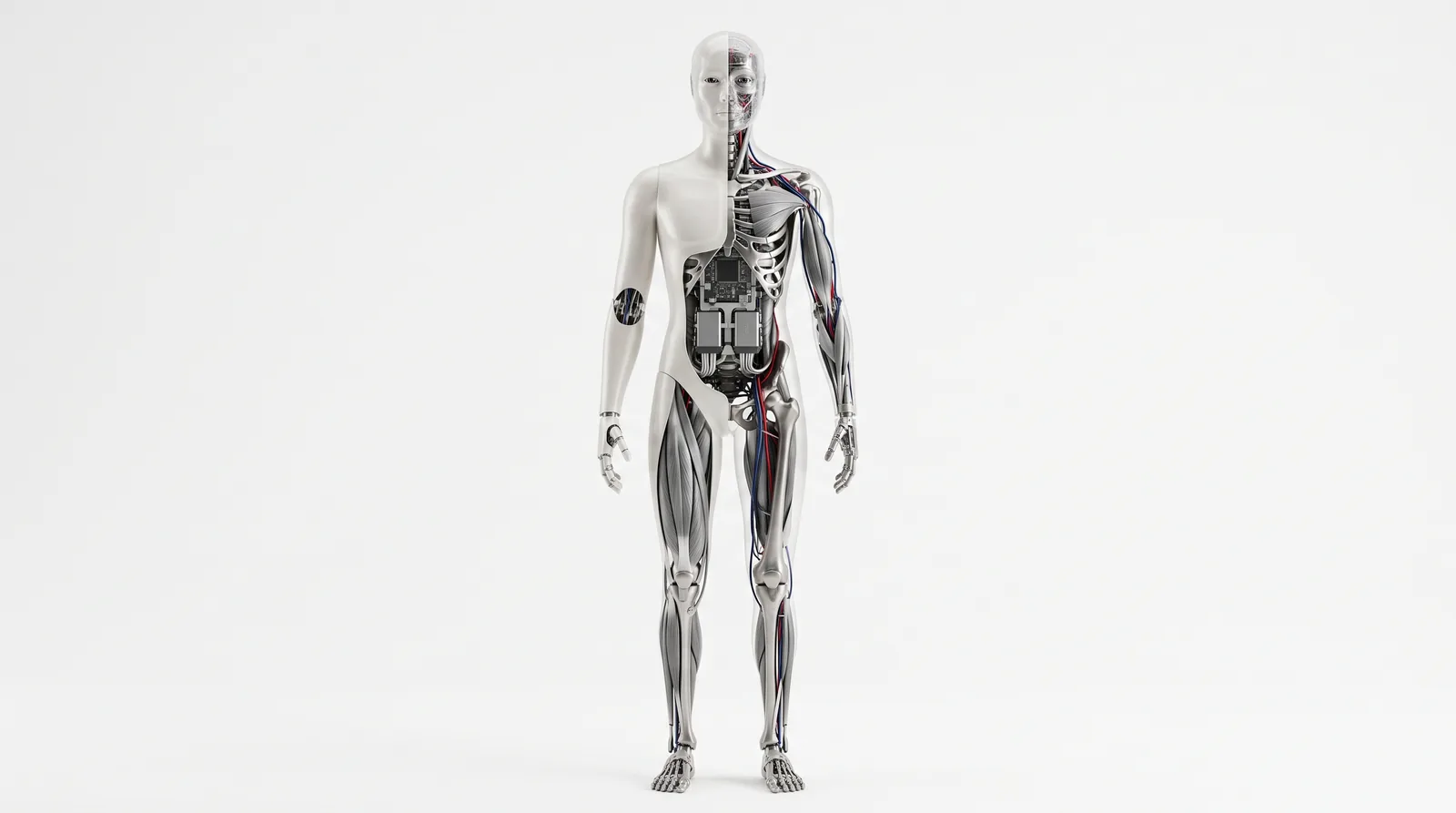
We would rather measure it than be impressed by it.
A body that photographs well and behaves badly is a prop. So the test is not whether a still frame is convincing — it is whether the same face holds through a turn, whether a held expression decays the way a real one does, whether the eyes settle instead of locking. We already certify our synthetic identities against a signed record rather than a screenshot. The physical work inherits that: if we cannot measure it, we do not claim it.
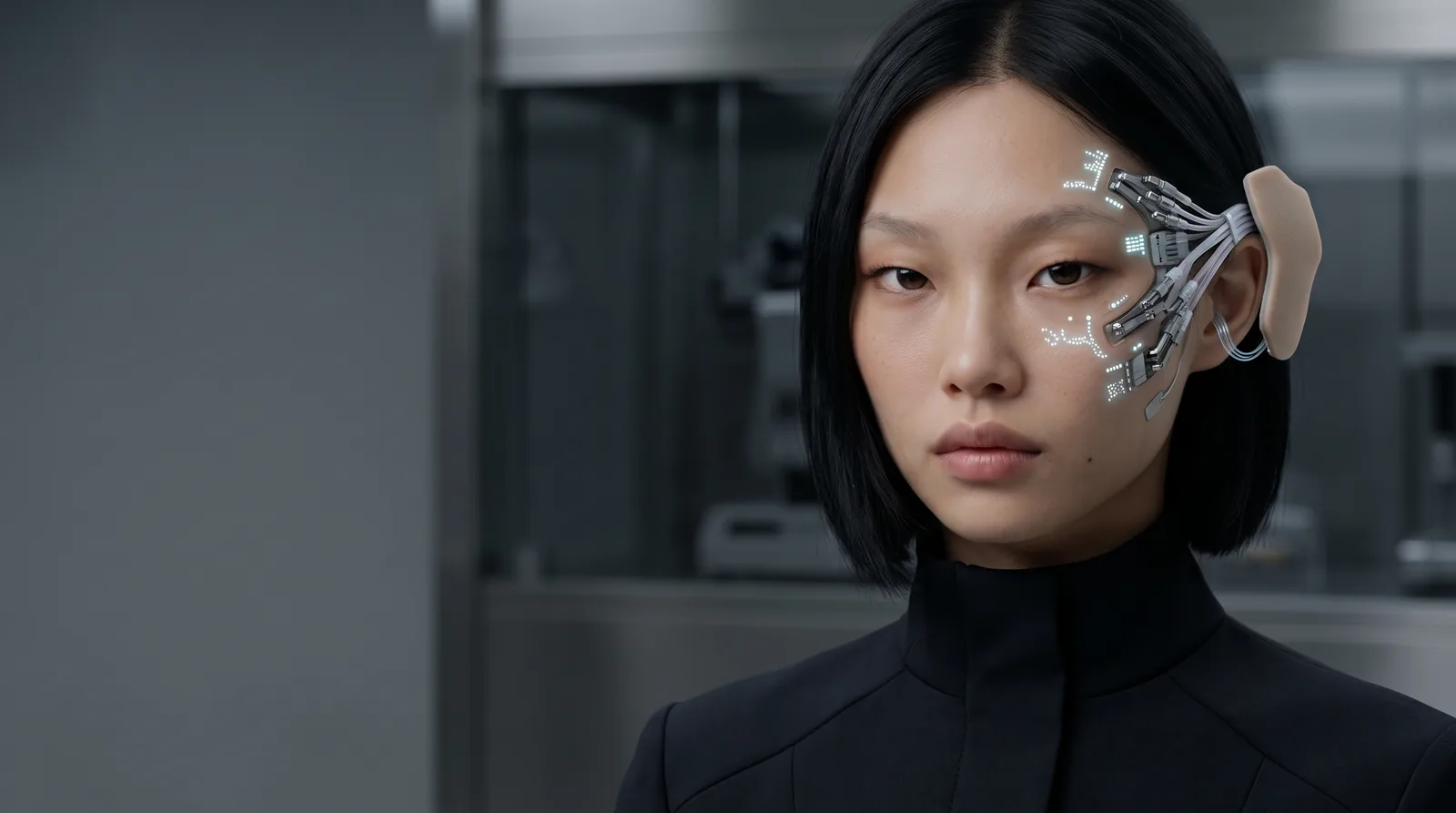
A face on a bench is a mould. We are not making moulds.
The obvious way to build this is a catalogue: one frame, a row of interchangeable faces, pick a look. It is cheaper, it scales, and it produces something nobody is attached to. We are going the other way — one identity we already own, already hold consistent, already certified, given a single body that belongs to her. Not a size range. Not a configurator. One.
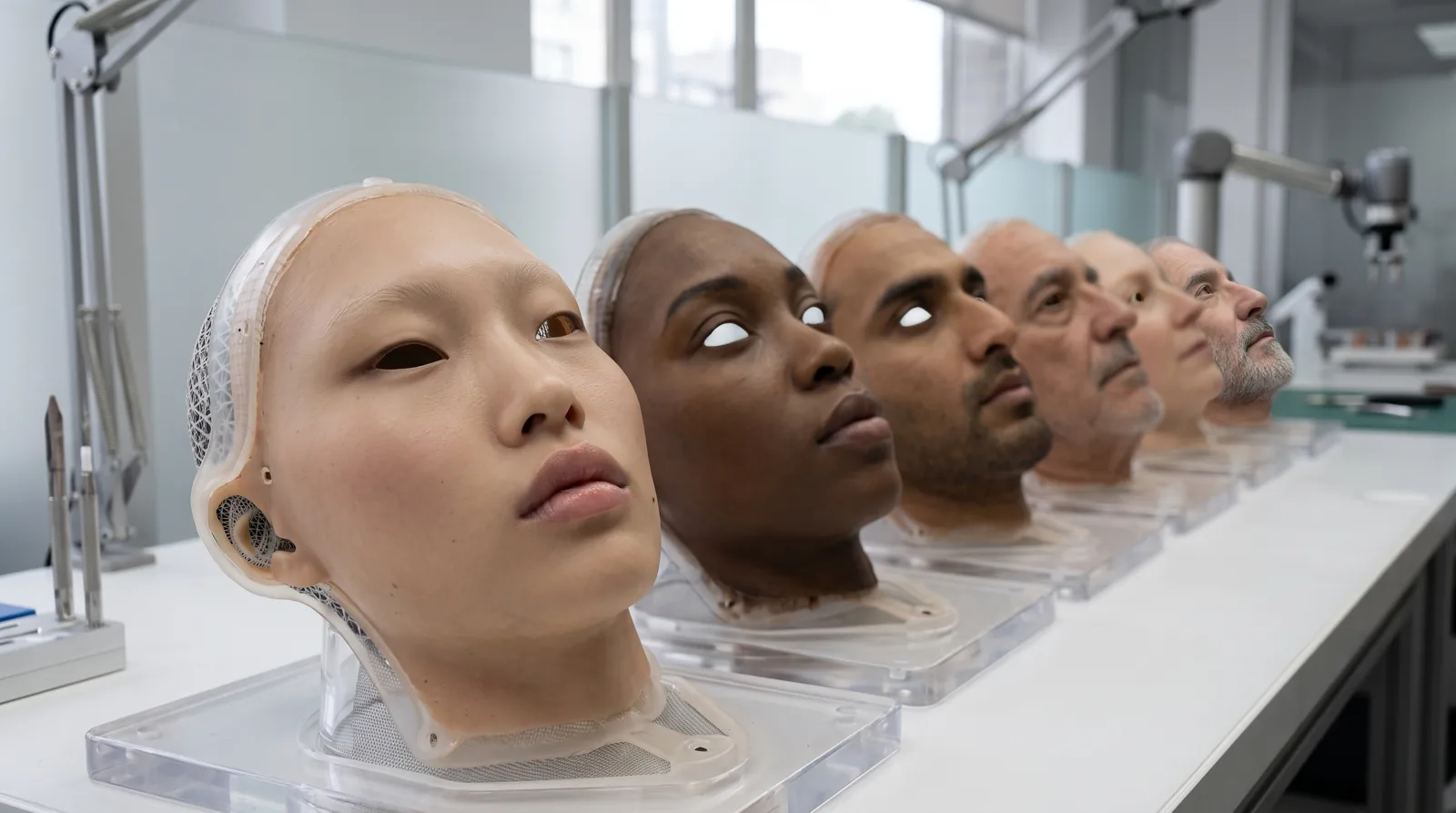
Where it stands.
Planning, with nothing built to show. We are publishing this at the start rather than at the reveal, because the intent is real and we would rather be on record early than stage a surprise. This page will change as the work does.