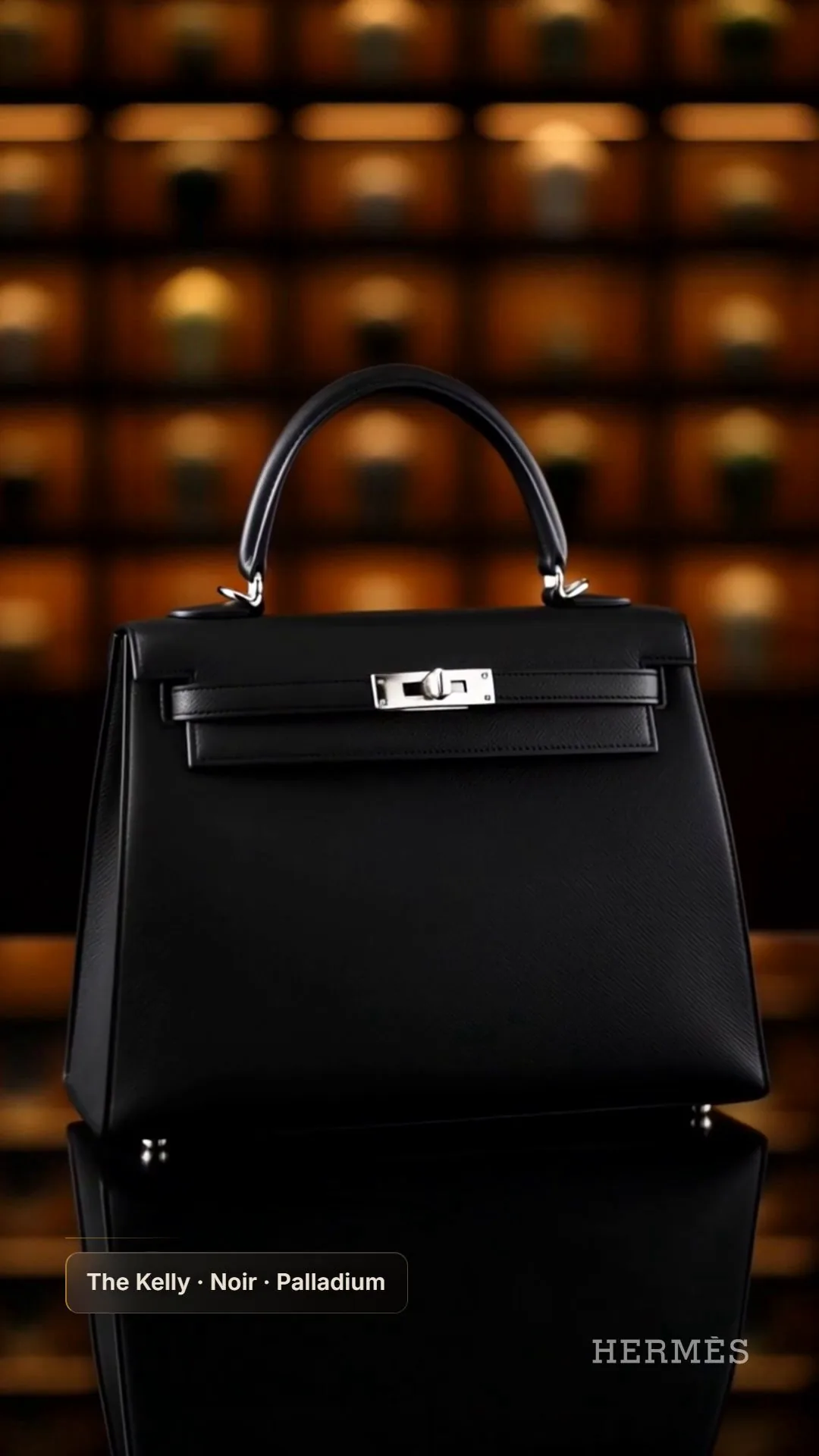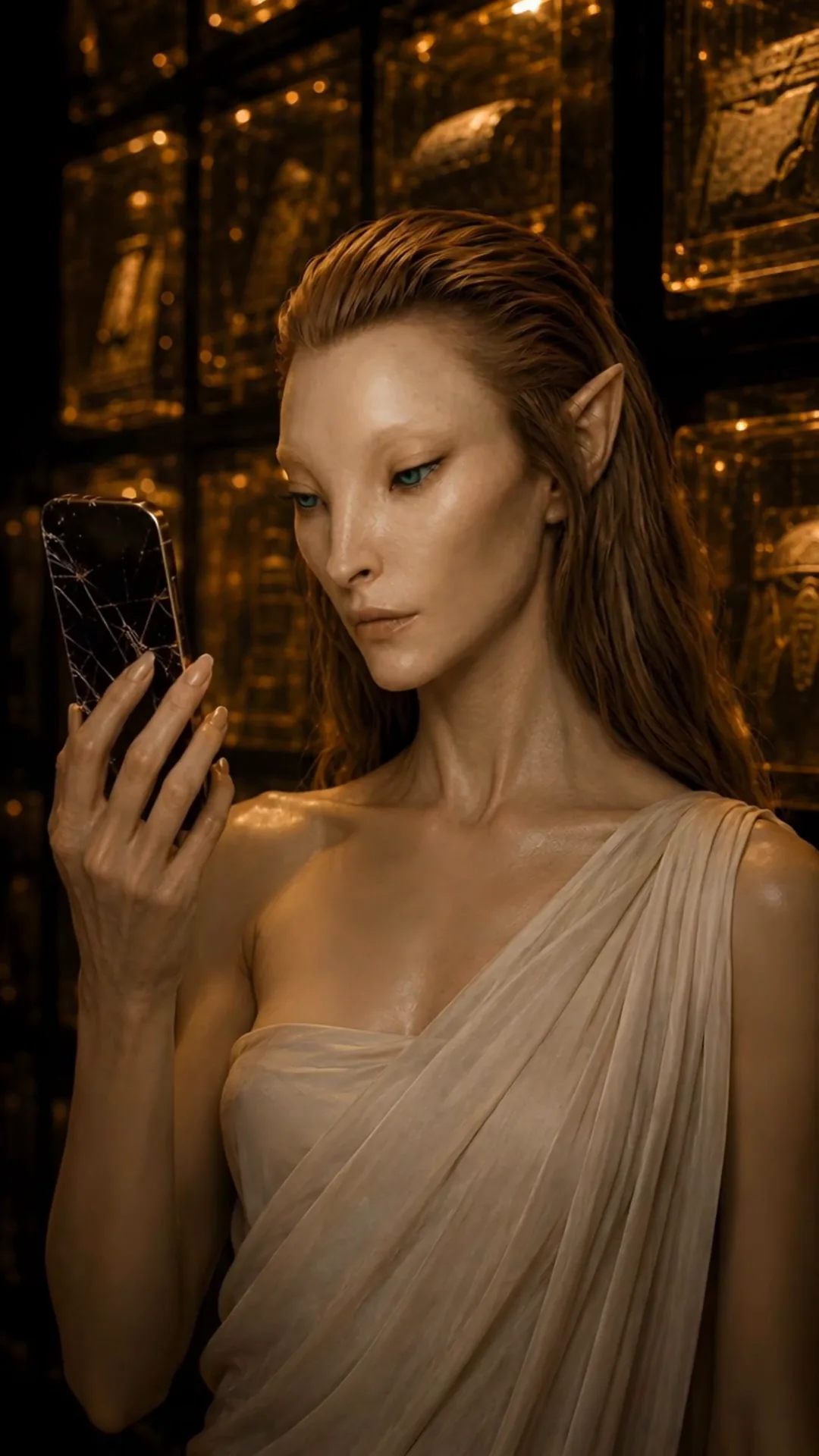

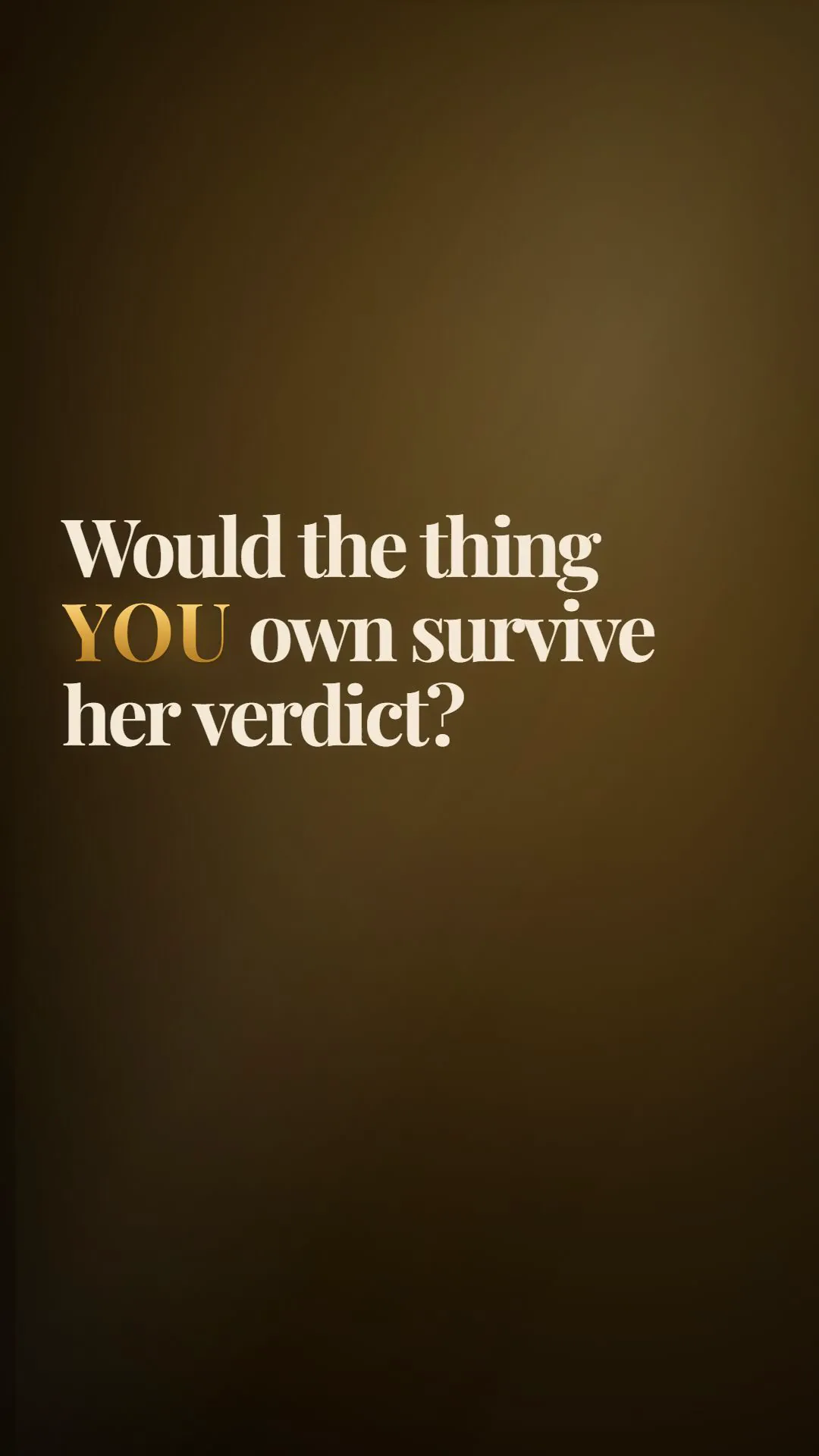
A 60-second vertical brand film, end-to-end AI-crafted. An ancient synthetic archivist walks an amber wall of every object humanity ever made — and passes a verdict on each: keep, or discard. One thing survives. The whole piece is a question aimed at the viewer: would the thing you own survive her verdict?
This is a concept spec piece — an imaginary luxury campaign produced to show what an OMNI Labs synthetic film looks like end to end. No shoot, no crew, no location. One original synthetic character held identical across eight shots, one product held identical alongside her, and a designed motion layer that turns raw clips into an actual ad film instead of an AI montage.
The point isn't the model — it's the direction. The image-to-video was generated on an inexpensive, near-zero-cost video model: deliberately cheap, because the craft is in everything wrapped around it. Identity locking across frames, a verdict mechanic built for the feed, kinetic typography cut to the beat, and a full original soundtrack — a first-person narration in the archivist's own voice, scored under a custom audio mix. Cheap generation, expensive taste.
One Character, Held Identical
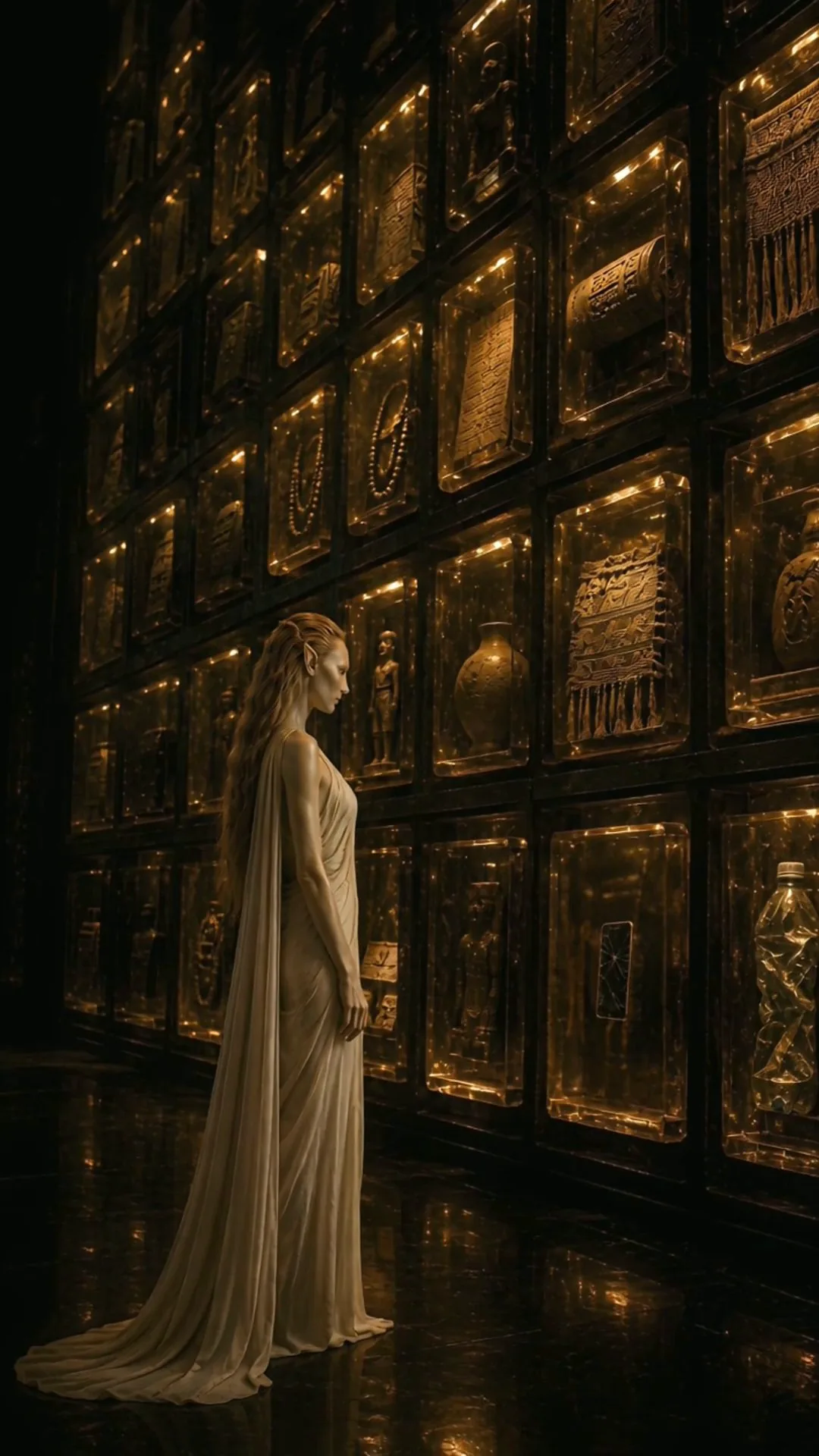
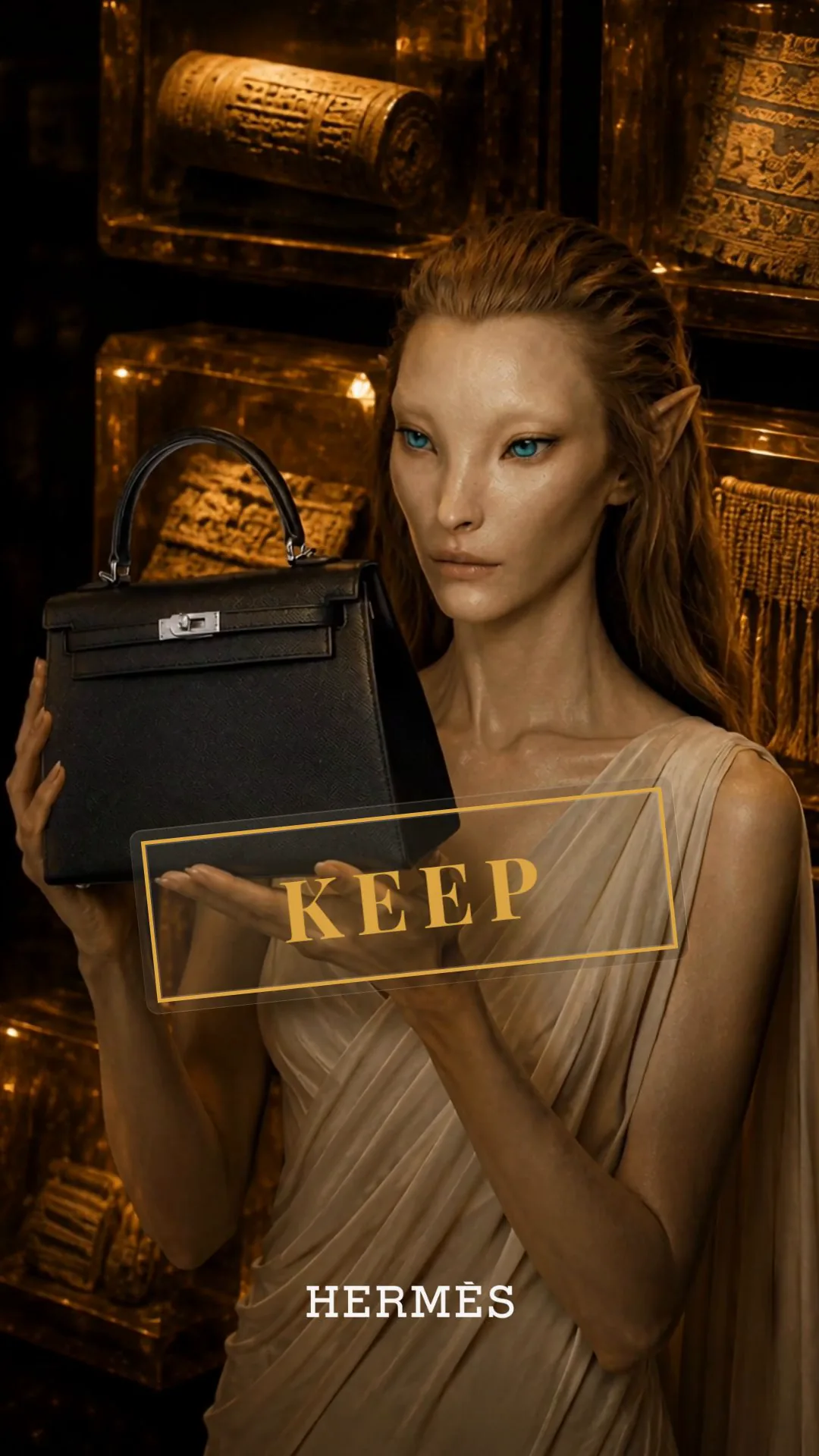
Vaelara is an original synthetic persona — a Lyrian humanoid, built and owned in-house. The hard part of AI film isn't generating one beautiful frame; it's the same face across eight of them. She holds across every shot: the bone structure, the eyes, the ears, the skin — no drift, no morphing between cuts.
The Verdict Mechanic
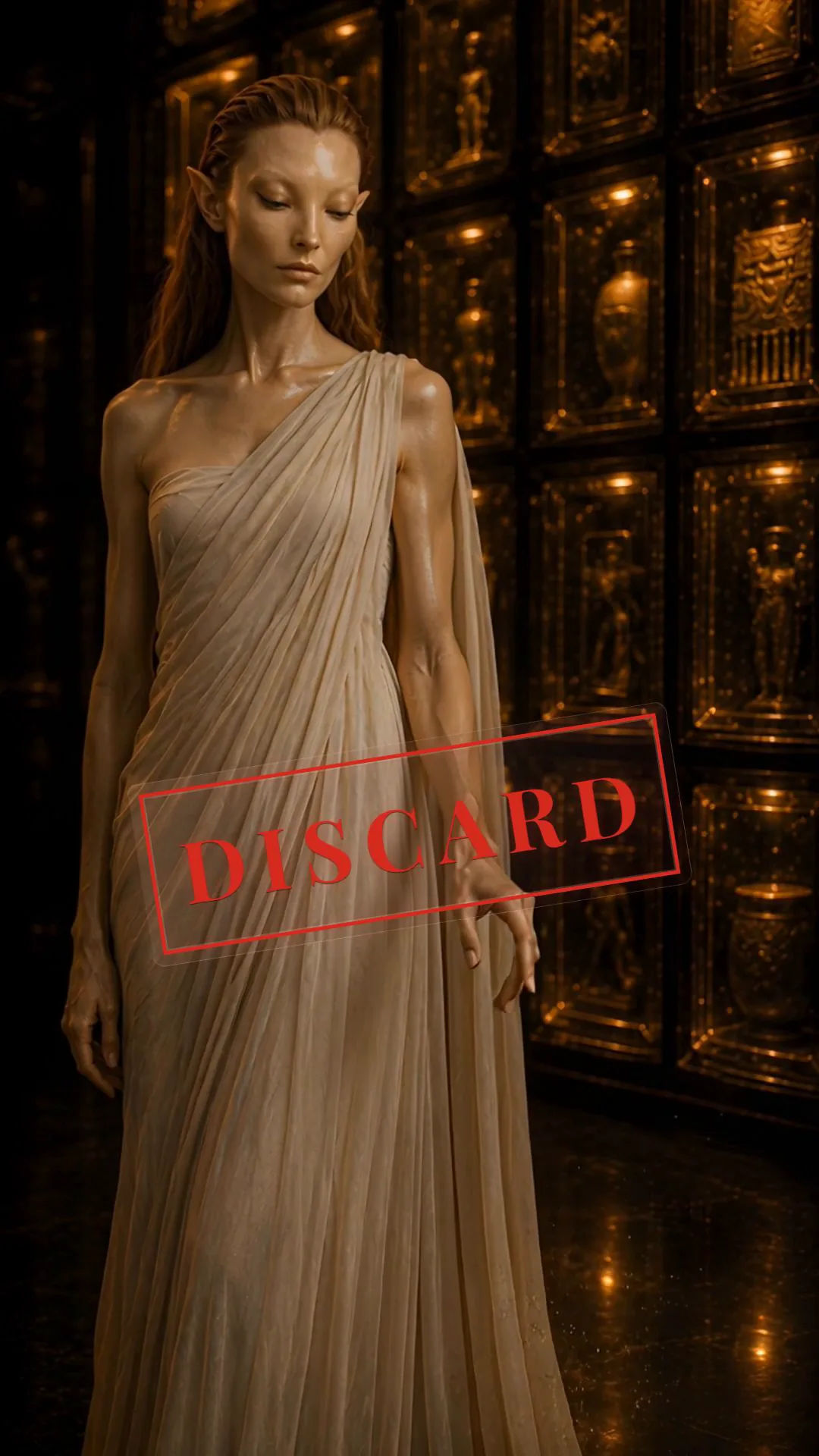
The film is built around a single feed-native device: she judges each object and a stamp lands — KEEP or DISCARD. It's a hook engineered for replay and comment, the editorial idea doing the work — not the render.
The One Thing That Survives
Everything modern is discarded. The single object she keeps is a timeless one — the positioning of the entire piece in one frame: the thing an archivist older than civilisation would still choose to keep.
Designed, Not Generated
Raw image-to-video clips don't make a film. Each clip was colour-graded and re-timed, then composited with a designed motion layer — kinetic serif typography, metallic verdict stamps, glass lower-thirds, cross-dissolves — and closed on a question. The generation is cheap; the cut is the craft.
Her Own Voice
The archivist narrates the film in the first person — an original eight-segment script, beat-aligned to the cut and scored under a custom atmospheric mix. The sound is built last, against a locked picture, so voice and image land together.