
A Wireframe Hologram Effect Built from Depth, Not Generated
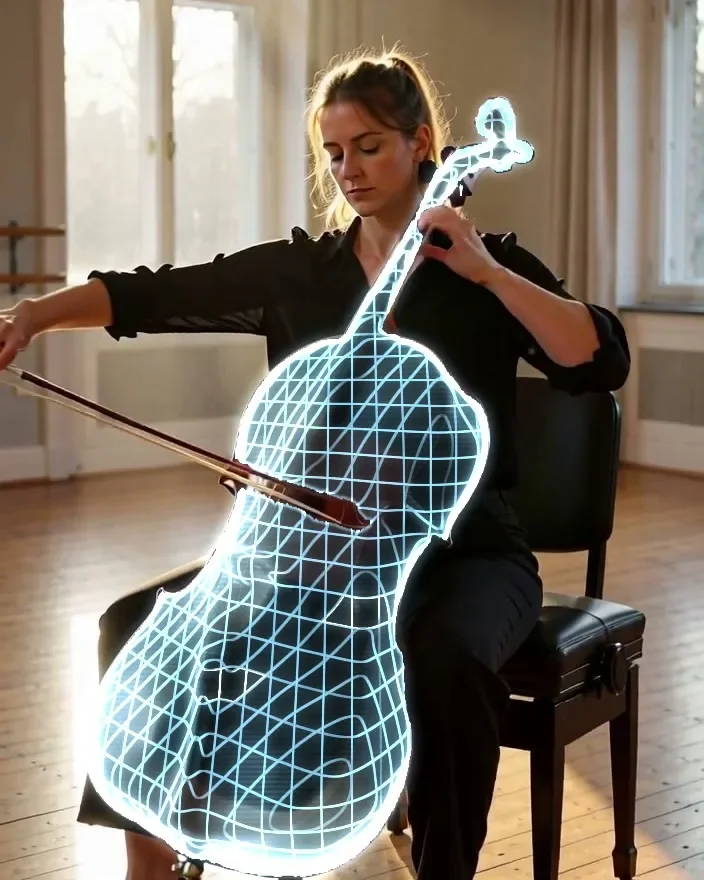
One object turns into a glowing digital twin while everything else stays real. A text prompt picks the object, depth wraps the grid around its curves, and it rendered on the first try for $0.
Key takeaways
- The object is chosen with a text prompt: SAM3 matted "the cello" in 30 seconds with no empty frames.
- The grid is triplanar in 3D, cut from the depth surface, so its lines curve around the body instead of lying flat on screen.
- Translucency comes from a cheap clean plate (blurred surroundings), which is enough at hologram opacity.
- The bow and hands stay in front of the hologram; the legs and chair show through it.
- Limits: the grid slides slightly on a moving object, and fine lines need an upscaled source.
The reference
A widely shared reel turns objects in a room into holograms: chairs, a lamp, a seated man and an alpaca become white-blue wireframes, with grids that wrap the curve of each cushion and lampshade. The transitions are hidden inside whip-pans, so the effect is never seen switching on. That is clever, because the switch is the hardest part to make convincing.
The wrap is so clean that it is either a generative video edit ("turn the chairs into wireframe") or built from real depth. Our assumption is the former. We wanted the same look with the control of the latter, using the pieces we already had from the LiDAR effect.
How we built it
Our test was a MiniMax H3 clip of a cellist, 704x1280, 124 frames.
- Pick the object. SAM3 takes the prompt "the cello" and returns a matte for every frame, in 30 seconds, with no empty frames.
- Wrap the grid. Depth for each frame lifts every pixel into 3D. Grid lines are drawn where the X, Y and Z planes cut that surface, so they curve around the cello's body rather than lying flat on the screen. Each family of lines is weighted by the surface direction, so lines do not smear where a plane runs along the surface.
- Shade it. Blue-white tint, an edge glow, a rim light where the surface turns away, moving horizontal scanlines, sparkles at grid crossings and bloom.
- Make it translucent. A hologram needs to show what is behind it. A cheap clean plate, the surroundings blurred into the object's area, is enough at hologram opacity; full video inpainting is not needed.
A wave turns the cello into a hologram from bottom to top at 0.8 seconds, and back from top to bottom at 3.8 seconds. The bow and her hands stay in front; the far leg and the chair show through. It rendered in seconds, on the first try, for $0.
Limits
- The grid lives in camera space. On a moving object it slides slightly over the surface. On a hologram that reads as scanning; if a fixed texture is needed, it is not enough.
- Resolution. The source was 704 px wide, so fine grid lines come out soft. For delivery, upscale first, then apply the effect.
- Several objects. The reference converts a whole set of furniture at once. A prompt like "the chairs and the lamp" should run the same way; we have not tested it.
Hologram or LiDAR?
They share every part and do different jobs.
| Dimension | Whole-scene LiDAR | One-object hologram |
|---|---|---|
| What changes | the entire frame | one named object |
| Reads as | a cinematic transition | a digital twin, emphasis |
| Best for | openers, scene changes | products and objects next to real people |
| Cost | $0, local | $0, local |
For agency work the hologram is the more saleable of the two: the product becomes the hologram, the person stays real. The natural next step is the reverse, a hologram that materialises into something solid, which is exactly what we tried in The Snap Reveal.
Related

Building a Room Out of Holograms: Empty Set, Wireframe, Solid
An empty place fills up as wireframe holograms that turn solid on a spoken word. We did it on a locked Unreal shot and on handheld AI footage, then spent three rounds killing the flicker.
The Snap Reveal: Why MiniMax H3 Ignored the Gesture and Unreal Didn't
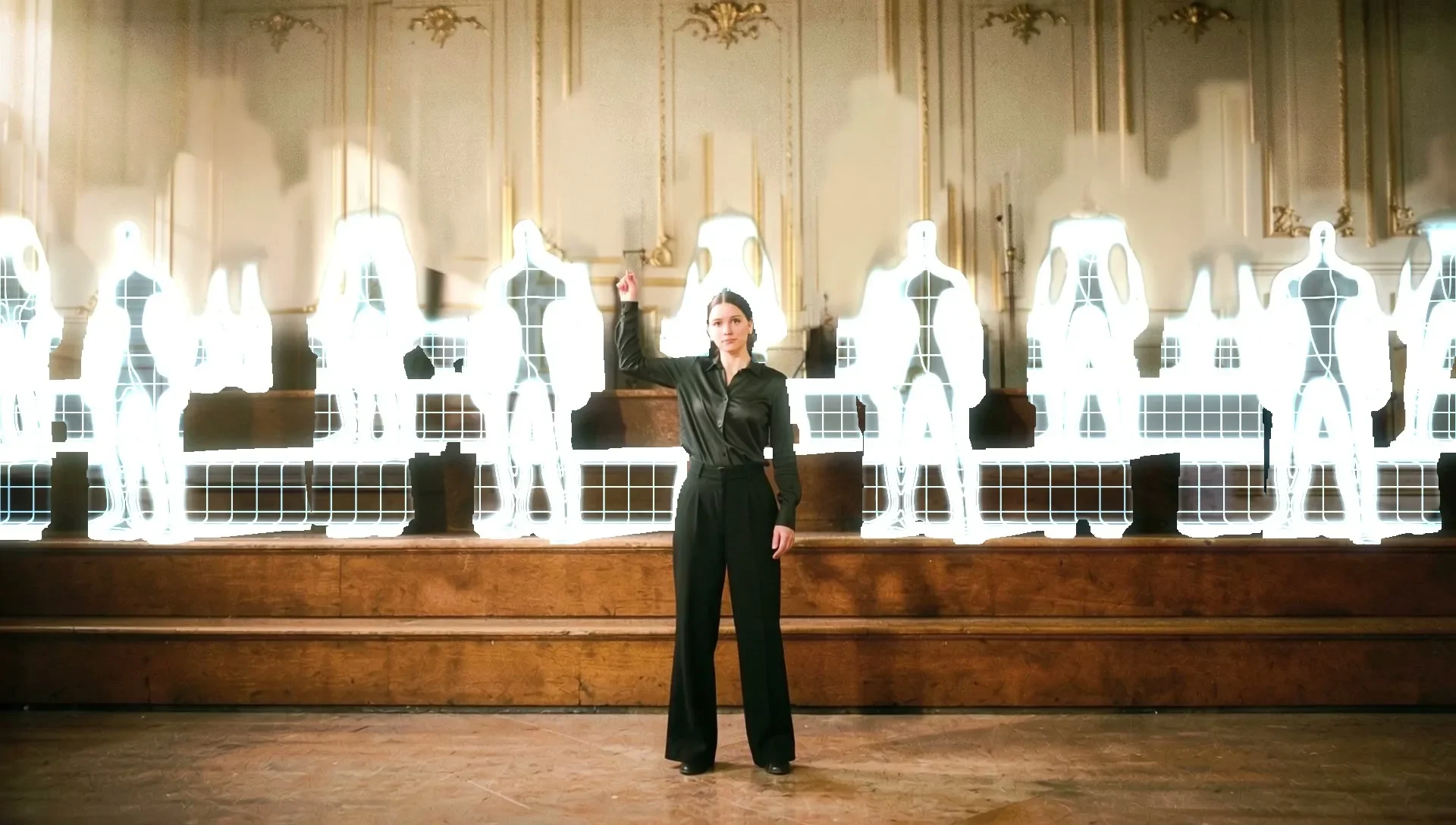
A woman snaps her fingers and a choir appears behind her. A frame-to-frame video model kept her playing and faded the choir in like ghosts. Blocking the gesture in Unreal put it exactly where we wanted it.
Built, Not Generated: A LiDAR Scan Effect on AI Video
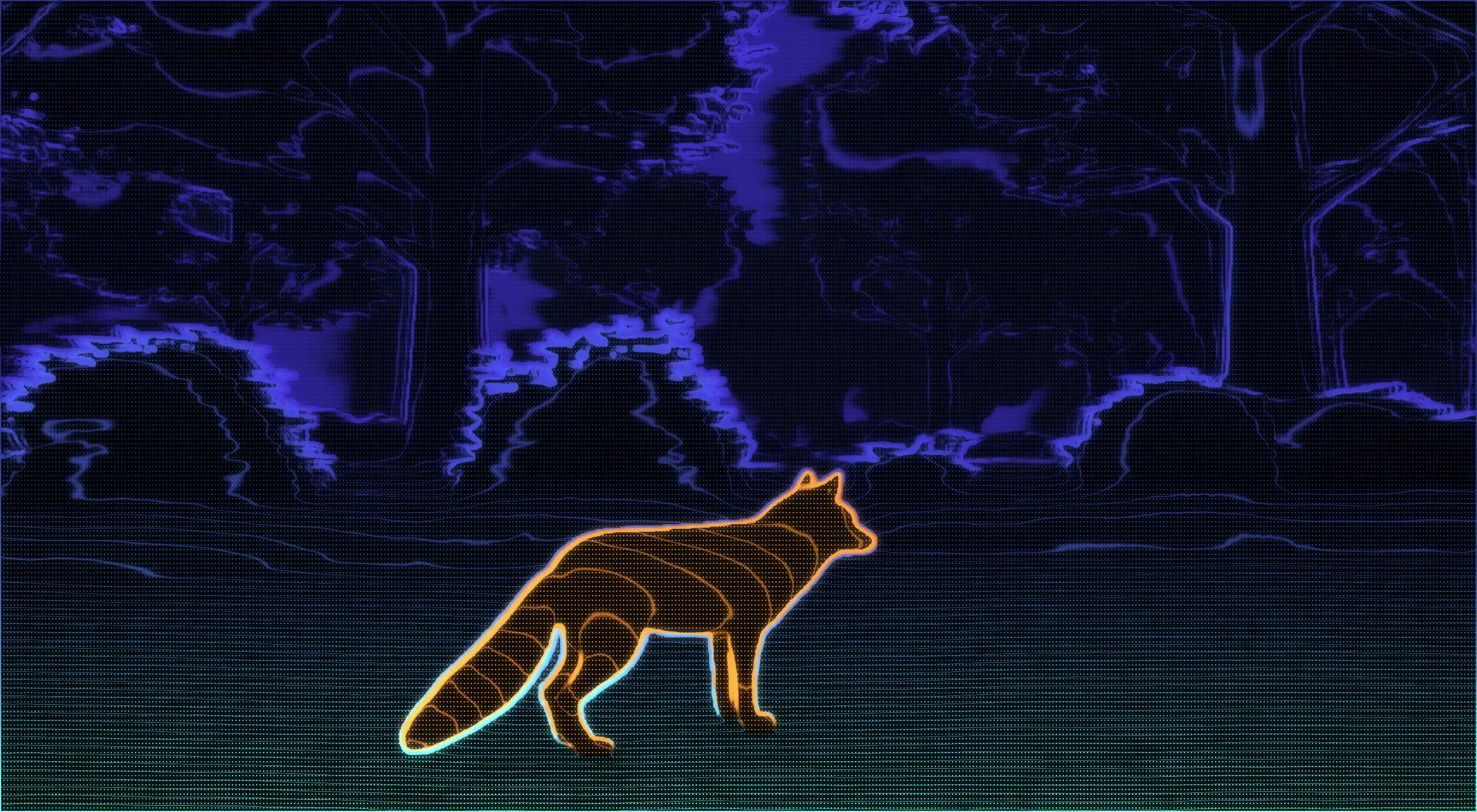
We built the viral LiDAR look from depth instead of asking a model to regenerate the clip. The 2.5D version renders 598 frames in 25 seconds; the 3D version gets real parallax from a single frame.