
Dolly Zoom in AI Video: How to Prompt the Vertigo Shot
How to execute a prompt-only dolly zoom in AI video: verbatim syntax, camera angles, 480p probes, and why cuts break the Vertigo effect.
Key takeaways
- A prompt-only dolly zoom succeeded on Seedance 2.5 during a 4-second 480p probe without video references.
- The prompt must name the effect, detail both mechanical vectors, and state that subject size holds constant.
- Placing a dolly zoom immediately following a hard cut breaks the effect, collapsing it into a simple push-in.
- Probing at 480p costs $0.82 ($0.2056/s), while full 720p clips cost $3.24 ($0.4622/s) on our Higgsfield API.
- The physical environment must feature deep background architecture; flat backdrops render the effect invisible.
Empirical verification of the prompt-only dolly zoom
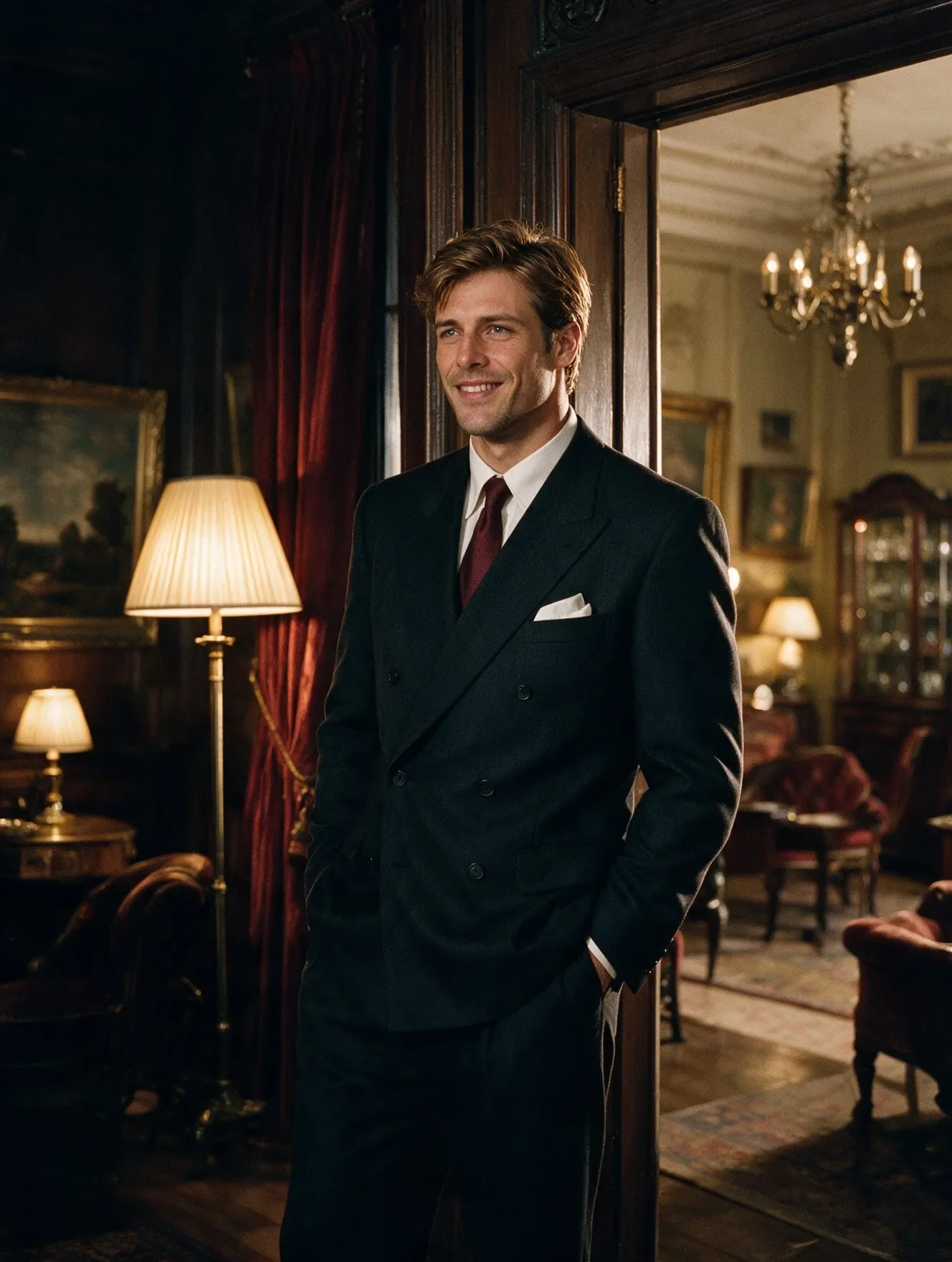
We tested a prompt-only dolly zoom on Seedance 2.5: a 4-second 480p probe from a medium-shot first frame, with no video reference. Across the QA frames the subject's head stayed the same size while the arched doorway behind him grew and changed perspective — the dolly zoom happened.
Executing optical camera illusions in generative video models has historically required complex 3D camera path control nets or dedicated video references. Diffusion models naturally confuse zoom optics with physical translation, treating focal changes as simple coordinate shifts.
Our empirical tests on Seedance 2.5 confirmed that pure text conditioning can reliably synthesize this complex optical contradiction. By maintaining a locked subject scale while warping the background perspective, the model successfully reproduced the psychological disorientation pioneered in classic cinema.
Recreating classic cinematic camera maneuvers through pure text prompting demonstrates the sophisticated spatial capabilities of modern video diffusion models. By balancing physical translation against optical zooming within a single continuous take, the model captures the unsettling psychological sensation of internal realization. Verifying this behavior empirically confirms that complex visual storytelling can be achieved without cumbersome 3D tracking rigs.
Verbatim prompt mechanics and the size-hold rule
The wording that worked, verbatim: "dolly zoom (the Vertigo effect), one continuous take, no cuts. Camera: dollies slowly and smoothly straight backward at eye level while the lens zooms in at exactly the same rate, from ~47° natural to ~22° telephoto. Framing: medium shot, head and chest, stays the same size."
Name the effect AND spell out both halves of the mechanism (the dolly direction and the opposite zoom) AND state that the framing holds the subject's size. Words alone confuse a dolly with a zoom; the size-hold sentence is what separates them.
Diffusion networks prioritize explicit physical constraints over generic cinematic terminology. Merely requesting a 'Vertigo shot' yields inconsistent results because the latent space conflates rapid zooms with physical dollies. Deconstructing the mechanics into three synchronized statements—backward physical translation, optical focal tightening from ~47° to ~22°, and an absolute command that head and chest stay the same size—forces the attention layers to balance opposing transformations.
Deconstructing complex optical moves into explicit mechanical instructions eliminates semantic confusion in video generation. Telling the model precisely how the camera moves, how the focal angle tightens, and that subject scale must remain constant prevents the solver from collapsing into a standard zoom. This precise syntax establishes a reliable template for high-impact dramatic shots.
Why hard cuts and multi-shot clips break the effect
When the same move was the second shot of a 7-second 720p clip, after a hard cut and with a wider lens range (~75° to ~27°), the subject's face grew across the frames instead: it read as a push-in, not a dolly zoom. Give the dolly zoom its own clip rather than a slot after a cut.
Video diffusion models process temporal blocks with shared contextual attention. When an abrupt scene cut occurs mid-generation, the model struggles to simultaneously resolve new spatial geometry and initiate opposing optical moves across the transition boundary. The optical tension collapses, and the camera simply drifts forward into a standard push-in.
| Configuration | Duration | Resolution | Cost | Outcome / Visual Read |
|---|---|---|---|---|
| Dedicated clip (prompt-only) | 4 s | 480p | $0.82 ($0.2056/s) | True dolly zoom; arched doorway warped, subject held |
| Multi-shot post-cut (75° to 27°) | 7 s | 720p | $3.24 ($0.4622/s) | Failed; face expanded into unwanted push-in |
| Magnific 3D Motion preset | 5 s | 720p | 2,600 credits | +400 credit premium over base 2,200 Seedance run |
To ensure consistent optical behavior, dolly zooms must always be rendered as isolated, dedicated takes. Compositing the effect into longer sequences should be handled downstream in Remotion or your editing timeline.
Temporal continuity is delicate in synthetic video pipelines. Introducing hard cuts within a single generation block destabilizes the model's attention mechanisms, causing intricate optical maneuvers to disintegrate. Isolating signature moves into dedicated shots ensures that the visual distortion renders cleanly without unwanted push-in drift.
Economics and probe validation on the Higgsfield API
Cost on our API: a 4-second 480p probe is about $0.82 ($0.2056 per second); the 7-second 720p clip was $3.24 ($0.4622 per second). Probe at 480p before spending on 720p.
At commercial production scale, rapid iteration requires strict cost gating. Testing complex optical moves directly at 720p wastes client budget on failed motion trajectories. At $0.2056 per second, a 4-second probe costs less than a dollar, providing immediate proof of optical perspective warping before rendering high-definition deliverables.
Our preferred route is a camera path by video reference, or a Magnific 3D Motion dolly-zoom preset. The preset adds 400 credits to the normal Seedance price (2,600 against 2,200 credits at 5 s and 720p) and is available only in the web UI, with no MCP surface.
When guaranteed precision is mandatory, relying on curated motion presets or motion reference video bypasses prompt ambiguity entirely, albeit at a platform credit premium.
Narrative placement, background depth, and frequency rules
Our rule for a dolly zoom: it needs a trigger written immediately before it (a line, a sound or a sight), and the character must be seen calm at a similar size earlier, so the change reads as their realisation.
The background needs structure. Against a flat wall the effect is invisible, so we never place a dolly zoom on a plain background.
Because the dolly zoom relies on dynamic parallax shifts between foreground subjects and background planes, geometric depth is structurally essential. Deep hallways, colonnades, arched doorways, or layered architectural interiors maximize perspective distortion. If a character stands against a seamless studio cyc or flat textureless wall, the background cannot compress, and the visual read fails completely.
We rate identity risk as medium to high, because the background warps around a held face.
Frequency: once per season at most. Vertigo moments are signature devices, and we do not spend them on ordinary turns.
Overusing dramatic optical distortion exhausts visual impact. Reserving the technique for climactic psychological revelations ensures that the dolly zoom retains its visceral cinematic power.
Strategic restraint is essential when employing high-impact visual devices in episodic storytelling. Because the Vertigo effect radically alters spatial perception, using it sparingly preserves its dramatic weight for defining narrative turning points. Framing the move against detailed architectural geometry guarantees that the optical transformation delivers its maximum emotional effect.
Related
How to Prompt Seedance 2.5 for Dialogue Scenes
Two synthetic characters, two voices, two lines — and the right mouth moved for each on the first try. The structure that made it work, and the failures that taught us each rule.

Kling 4.0 vs Seedance 2.5: Cost per Second and What Each Gets Wrong
Kling 4.0 really is less than half the price of Seedance 2.5 on the same platform. What the price comparison leaves out is the three default behaviours you have to prompt against, and the question nobody has answered yet: faces.
MiniMax H3 Needs a Schema, Not Prose
We rewrote a camera move and the walk direction and got a byte-identical video. We changed only the seed and got a different film. What H3 actually listens to, measured on a local 16 GB GPU.