The Split Diopter in AI Video: How We Prompted and Locked It
Two planes sharp at once: prompt mechanics, decoupage linter rules, and why the aftermath carries the narrative meaning.
OMNI LabsUpdated
Key takeaways
Generated a vertical 9:16 split-diopter still at 941x1672 (upscaled to 2K) holding razor sharpness on foreground and background planes.
Prompt architecture describes two spatial halves separately, naming the 1970s cinema technique with capitalised failure tests.
Prompts enforce: 'If the man in the background is blurry, or if only one person is in the picture, THE IMAGE IS WRONG.'
Every split diopter requires a three-shot unit (setup, device, aftermath); isolated devices trigger fatal decoupage linter flags.
Corrected timeline places the split diopter at 10-13.5 s on the turn, passing decoupage linting with 0 errors and 0 warnings.
Two planes sharp: rendering the 1970s optical device
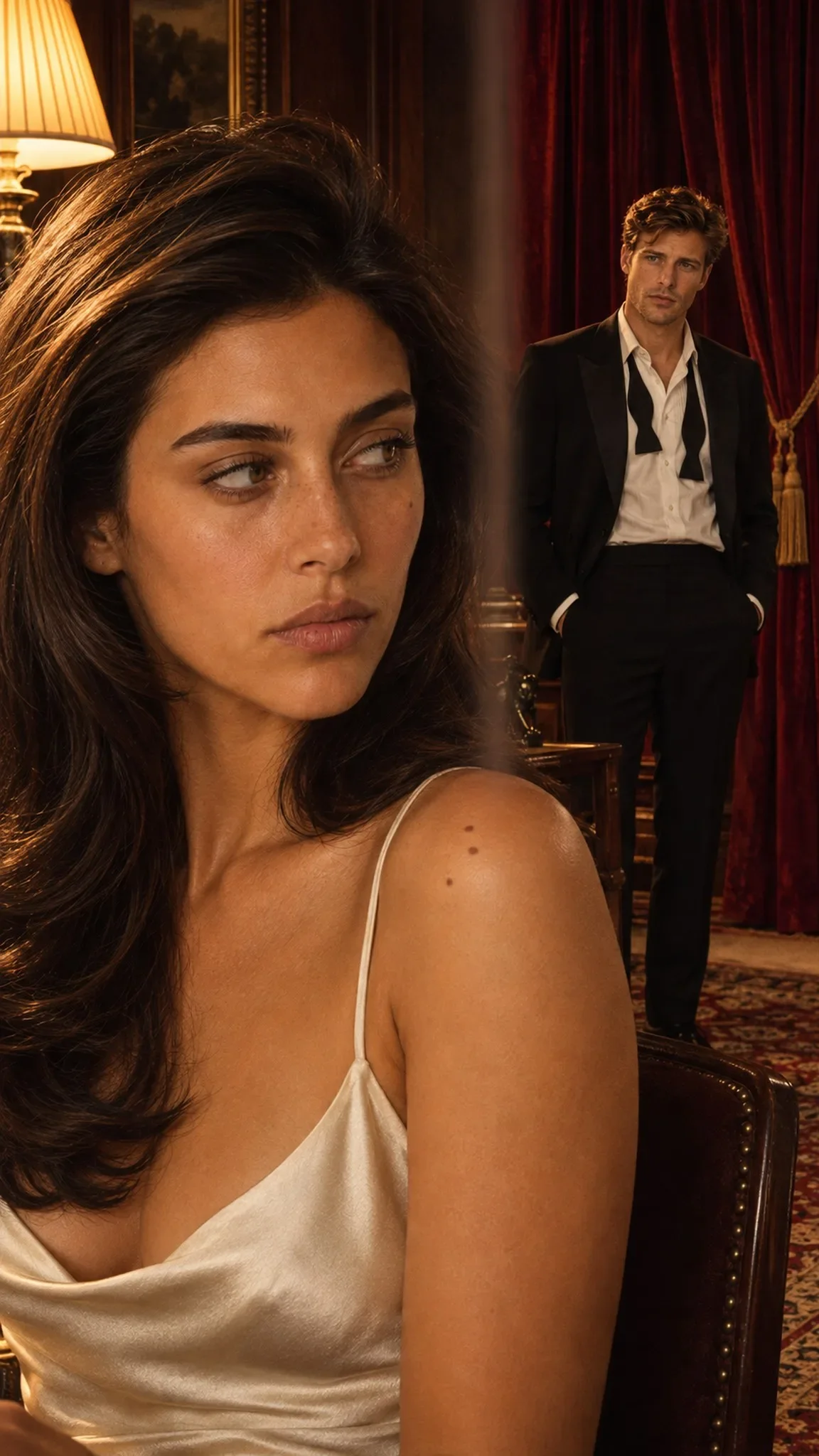
We generated a split-diopter two-shot as a still (vertical 9:16, 941x1672, upscaled to 2K) to use as the first frame of a video clip: a woman's face huge and razor sharp at the left, close to the lens, and a man standing far behind on the right, also sharp, with a soft vertical band of blur between the two halves. It came out right.
In practical cinematography, a split-diopter lens attaches a half-convex glass element over one portion of the primary objective, allowing two widely separated physical depth planes to register in sharp optical focus simultaneously. In generative AI pipelines, diffusion models naturally default to conventional shallow depth-of-field distributions, heavily blurring either the foreground portrait or the background subject. To establish this iconic 1970s optical effect, our team generated a vertical 9:16 master keyframe at 941x1672 resolution, subsequently upscaled to 2K. The resulting frame anchored our lead female talent on screen-left in extreme close-up while maintaining crisp facial definition on the male subject positioned far in the background on the right, divided by a characteristic soft vertical seam of blur.
What made the image model render it: the prompt opens with the rule and names the technique as a famous 1970s cinema device, describes the two halves separately (left half focused very close, right half focused far away, a soft vertical band of blur between them), and states a failure test in capitals: 'If the man in the background is blurry, or if only one person is in the picture, THE IMAGE IS WRONG.'
Prompting dual focal planes requires explicit syntactic separation. Simply requesting a 'split-diopter shot' causes modern text encoders to hallucinate standard cinematic bokeh. Success depends on decomposing the composition into discrete spatial compartments: specifying the left half focused very close, the right half focused far away, and a soft vertical blur boundary dividing them. Furthermore, appending an aggressive failure condition in capital letters—stating that 'If the man in the background is blurry, or if only one person is in the picture, THE IMAGE IS WRONG'—forces cross-attention layers to suppress single-subject depth shortcuts.
Spatial geometry specification and the video stage horizon
Describe the two subjects' positions, sizes and eyelines separately (left: face in three-quarter view, cut at the shoulders, looking toward the right; right: full figure far behind) - the image model needs the geometry, not the term alone.
Diffusion architectures require explicit geometric coordinates rather than high-level cinematic terminology. Prompts must dictate precise actor framing, scale differentials, and eyeline vectors independently: assigning the left subject as a three-quarter portrait cropped at the shoulders gazing toward screen-right, while defining the right subject as a full-length figure standing deep in the background. Providing granular spatial coordinates ensures that attention blocks resolve distinct focal clusters without merging subjects.
The video stage is the open part: the split-diopter still is the first frame of the clip, and we have not yet rendered that clip on Seedance 2.5, so whether the motion keeps both planes sharp is untested. Our plan keeps the camera static on this shot.
Translating dual-plane sharpness into temporal motion represents an active frontier. While the static 2K still successfully establishes both focal planes, animating the sequence through video diffusion models like Seedance 2.5 remains untested regarding whether continuous motion will preserve dual sharpness or revert to shallow focus. To mitigate generative drift, our production plan locks camera movement entirely, maintaining a static frame throughout the duration of the shot.
The three-shot unit rule
Our rule: every split diopter is a three-shot unit of setup, device and aftermath. Before it, a pan along one character's look, or an over-the-shoulder shot, must establish both characters and where they stand.
Optical devices must never appear as unmotivated visual spectacles. Within our studio decoupage grammar, an exotic device must function as the center of an indivisible three-shot unit: a preparatory setup that establishes spatial geography, the device itself capturing peak psychological conflict, and an aftermath that resolves the emotional reaction. Deploying a split diopter without preceding spatial coverage—such as a tracking pan following a character's eyeline or an over-the-shoulder master—disorients audience comprehension and reads as a superficial technical gimmick.
What the decoupage linter said about our baseline plan
Split-diopter decoupage grammar, linter validation, and turn placement · measured 25 Oct 2026
Measured on 2026-10-25; every split diopter must be preceded by motivated setup coverage.
A split diopter with no setup is an error in our linter. Our pre-skill baseline plan, a 30-second pool-terrace fixture, put the split diopter in the shot right after another device with no setup. The linter returned 12 errors and 3 warnings for that plan.
Automated storyboard linting eliminates structural directorial flaws before compute is spent. In our baseline 30-second pool-terrace sequence, placing a split diopter immediately following another technical move without setup coverage triggered twelve errors and three warnings in automated validation, highlighting five fatal back-to-back device conflicts.
Narrative turns, character introductions, and the aftermath
The corrected plan places the split diopter at 10-13.5 s on the turn, after an over-the-shoulder shot that shows both characters, with the aftermath on the next shot. That plan passes with 0 errors and 0 warnings.
Restructuring sequence timing according to decoupage principles cleared all pipeline warnings. In the approved storyboard, the split diopter is timed precisely at 10-13.5 s, coinciding with the central dramatic turn. Preceded by an over-the-shoulder setup that anchors both talents in the environment and succeeded by dedicated reaction coverage, the updated plan passed with zero errors and zero warnings.
A character who appears for the first time inside the diopter fails the check. Establish them first, with a pan or an over-the-shoulder shot, and only then use the device.
Spatial continuity rules prohibit introducing characters inside optical distortions. If a talent appears on screen for the first time within a split-diopter composition, the decoupage linter flags an immediate violation. Storyboards must establish character presence through conventional coverage before deploying split-focal optics.
The aftermath carries the meaning. In our worked example, the device is followed by a shot in which the reacting character's shoulders drop, so the viewer reads the line in the reaction.
The emotional weight of an optical device resolves entirely in the succeeding shot. In our production cut, the split diopter cuts to a medium close-up where the reacting character's shoulders visibly drop, allowing the audience to process the spoken revelation through authentic physical performance.
Device budget: about one device per 10 seconds, and never two devices back to back unless the second one pays the first. The baseline plan had 6 event devices in 32 s, or 1.9 per 10 s.
Overall directorial pacing enforces a strict device budget. Sequences must limit exotic optical techniques to approximately one device per 10 seconds, strictly avoiding back-to-back devices. The flawed baseline sequence crammed six event devices into 32 seconds—averaging 1.9 per 10 seconds (1.9 per 10 s)—exhausting audience attention and reducing dramatic storytelling to an incoherent technical showreel.