The six sapient personas and enterprise certification
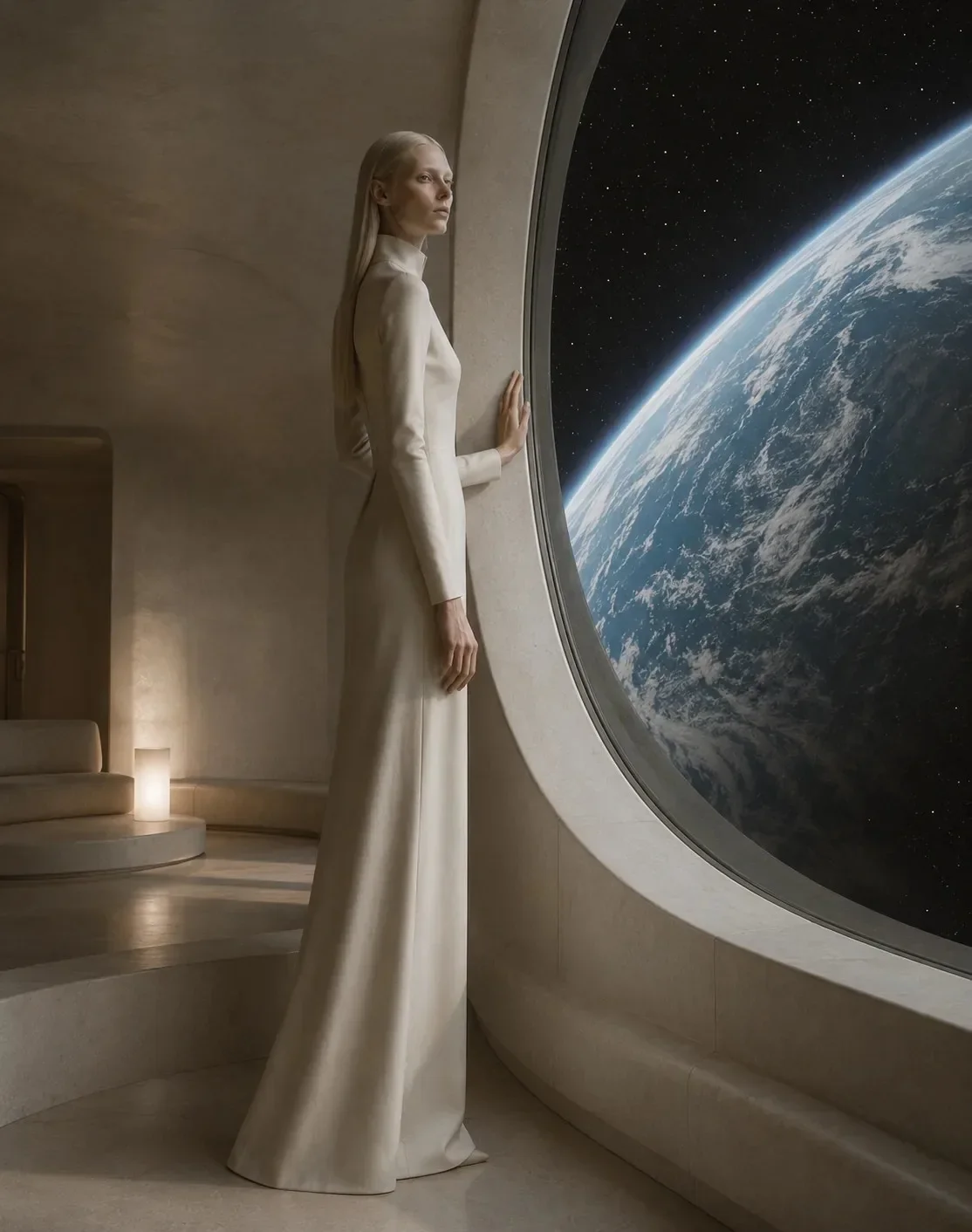
Our roster has six sapient-creature personas: Saela Nyx (Nordic ET), Vaelara Soryn (Lyrian humanoid), Varesha Nyr (Bengal felid), Veyra Sol (grey ET), Nyra Voss (raven woman) and Aeryn Vale (peregrine avian). All six were certified as of 2026-09-25, under the same enterprise certificate process as the human talent.
Developing non-human synthetic talent requires identical technical rigor to human model design. In commercial advertising, speculative fiction characters often suffer from inconsistent anatomy, shifting facial markings, and fluctuating proportions across campaigns. To establish absolute continuity, OMNI Labs formalizes creature talent into permanent roster personas. As of 2026-09-25, all six sapient personas—spanning Nordic extraterrestrials to avian humanoids—hold verified enterprise certificates with immutable cryptographic asset fingerprints, guaranteeing identity preservation across multi-market commercial deployments.
Our studio position is that a creature persona can be the protagonist itself, instead of a faceless model used as a canvas. Our collision doctrine names this as the studio's edge against a competitor that uses faceless humans as canvases.
Treating synthetic talent as compelling narrative protagonists defines our studio aesthetic. While conventional generative agencies utilize generic, faceless human figures as sterile backdrops for apparel, our collision doctrine pairs high-fashion luxury tailoring with fully realized sapient creatures. This juxtaposition establishes an unmistakable visual signature that commands audience attention in luxury editorial spreads.
That is the edge the collision doctrine names: the creature is the protagonist, and the competitor's faceless human is only a canvas. All six went through the same enterprise certificate process as the human talent, so a creature persona is a certified roster asset rather than a one-off render.
The anti-list discipline and the cosplay boundary
Our brief rule for any persona with a strong hook, including a creature trait, is an anti-list: fantasy elf, vampire, albinism-as-costume, beauty filter, red demonic eyes. Without it the hook renders as cosplay and eats the character.
Generative diffusion models possess entrenched cultural priors derived from fantasy gaming and entertainment imagery. When an artist prompts for an alien or creature character, the latent attention map immediately gravitates toward superficial clichés: pointed elf ears, gothic vampire styling, and glowing demonic eyes. These cartoonish tropes destroy high-fashion sophistication, reducing high-end editorial concepts to amateur comic convention cosplay.
To protect character integrity, every creature styling brief incorporates an immutable anti-list. Explicitly excluding fantasy tropes forces the generative engine to synthesize grounded biological textures, refined bone structures, and realistic anatomical adaptations that integrate naturally into contemporary fashion environments.
Silhouettes, coat structures, and the alien-cool aesthetic
A panel review of a grey-ET hero frame (2026-06-16) said the alien read risked tipping into costume rather than presence. The fix it asked for was to let the coat silhouette carry the identity work, so the face reads alien-cool rather than alien-weird.
Balancing extraterrestrial physiology with high-fashion elegance requires careful composition. During a critical review panel on 2026-06-16, an initial hero frame of our grey-ET persona Veyra Sol was critiqued for appearing awkward and theatrical. Over-emphasizing exaggerated cranial proportions and slender neck anatomy created an impression of a staged costume rather than an authentic sentient entity.
Sapient creature persona roster specifications and design boundaries · measured 25 Sept 2026
Persona Talent
Anatomical Archetype
Enterprise Certification
Design Anti-List Exclusions
Primary Editorial Anchor
Saela Nyx
Nordic ET
2026-09-25
Exclude fantasy elf and beauty filters
Architectural coat silhouette
Veyra Sol
Grey ET
2026-09-25
Avoid costume feel; alien-cool over weird
High-frequency skin texture and eye render
Varesha Nyr
Bengal felid
2026-09-25
Exclude cosplay and red demonic eyes
Tail and fur anatomical accommodation
Aeryn Vale
Peregrine avian
2026-09-25
Exclude vampire tropes and decorative albinism
Plumage and aerodynamic wing structures
Nyra Voss
Raven woman
2026-09-25
Prohibit fantasy tropes; enforce grounded styling
Tailored wardrobe accommodating anatomy
Certified 2026-09-25; all creature personas require 480p video probes prior to 720p production.
The panel recommended shifting visual weight from raw facial distortion to tailored garments. By encasing Veyra in an architectural, heavy-wool trench coat, the structured outerwear grounds the composition. The model's extraterrestrial features become subtle, sophisticated accents, transforming the visual tone from alien-weird into alien-cool.
Surface texture realism and resolving CGI-uncanny artifacts
The same review said the detail shot was the only frame that earned its place on the surface level, and that without a finishing pass on skin texture and eye render the alien reads as CGI-uncanny rather than editorial.
Photographic believability depends on resolving microscopic surface detail. In non-human character synthesis, standard diffusion passes often output rubbery, plasticized skin surfaces that trigger severe uncanny valley repulsion. During the 2026-06-16 review, the panel noted that only macro detail shots showcasing genuine dermal pores, realistic light scattering, and moist corneal reflections achieved photographic credibility.
Without meticulous texture finishing, non-human models collapse into looking like synthetic CGI video game assets. Dedicated post-processing passes must enhance natural skin imperfections, subtle specular catchlights, and micro-creases, ensuring the subject appears physically present in front of a real camera lens.
The panel's verdict on the detail shot was that it was the only frame that earned its place on the surface level. The finishing pass on skin texture and eye render is what separates CGI-uncanny from editorial.
Anatomical wardrobe tailoring and video probe prerequisites
Creature anatomy goes into the styling brief before any garment is chosen: wings, fur, tail, plumage and skin tone. Garments have to accommodate the body, not the other way round.
Fashion styling for creature talent demands bespoke anatomical engineering. In our wardrobe development pipeline, physical appendages—such as Aeryn's plumage or Varesha's tail—are defined in the brief before apparel is selected. Tailoring must incorporate customized vents, open back panels, and adjusted shoulder seams. Forcing complex creature anatomy into standard human garments creates visual absurdity, whereas purpose-built garments reinforce biological realism.
Untested: creature lip-sync and identity on a non-human face in our video rail. Our night-show plan requires a 480p probe of a creature before any 720p creature episode.
Translating static creature personas into dynamic video requires cautious budget allocation. While human facial performance is well-characterized across our video rails, non-human lip synchronization and cranial deformation remain technically untested. To mitigate financial risk, our production pipeline mandates running inexpensive 480p motion probes to validate facial geometry before committing studio capital to full 720p master episodes.
The order is fixed: wings, fur, tail, plumage and skin tone first, garment second. And until a 480p probe has run, creature lip-sync and identity on a non-human face stay untested, so no creature goes to a 720p episode on assumption.