
Hair and Make-Up Carry the 90s Film Look More Than the Grade
In our tests, hair and make-up carried the era more than the grade did: a modern face under a warm grade read as a filter. The rest of the look is six period setups, one default, and grain added in post.
Key takeaways
- In our tests, hair and make-up carried the era more than the colour grade: a modern face under a warm grade read as a filter, not a period portrait.
- The model is asked only for 'fine, even film grain, faces stay crisp'. Real grain goes in post, because a mushy face forces a re-roll of the whole clip at about $0.46 per second at 720p.
- The model's default world is the 2020s. Name the period object in every empty surface, then ban the modern object in the constraint line.
- L1 starts with a halation threshold of 0.80, a radius of 18 to 28 px and an intensity of 0.25 to 0.35. When the model already renders glow, we halve the post value.
- The pre-flight anachronism check runs on the still. Fixing the still costs cents; fixing the clip costs dollars.
Six period looks, and L1 is the default
OMNI Labs runs six period looks, L1 to L6. L1 is the default: 90s old-money glamour built on warm tungsten practicals, cream highlights and black-net softness. When a setting below is not tied to a named look, it is L1, and the numbers in this article come from that look.
The reason the period has to be briefed explicitly is the model's default world. The model's default world is the 2020s. Leave a surface empty and the model fills it with contemporary objects: a phone, an LED strip or a flat screen. A 90s room does not come out of the model unless the prompt asks for one.
We treat the look as a set of decisions made between the prompt and the finished clip, not as a filter added at the end. The sections that follow cover the ones we measured or rely on most: the objects in the frame, the faces, the grain, the glow, the frame itself and the still check.
Name the period object, then ban the modern one
An empty surface is a slot in the prompt, and the model fills it with what it knows best. We fill the slot ourselves. A cream corded telephone on the nightstand, a boxy CRT inside a wood-grain cabinet or a cassette deck each names a period object for that slot.
Naming the object is only half the instruction. Ban the modern object in the constraint line as well. A period object on its own does not stop the model from adding a phone or an LED strip somewhere else in the room, so the constraint line lists what must stay out of the frame.
The two halves belong together. The named object gives the model something period to draw; the ban removes the object it would otherwise reach for. Skip either half and the surface reverts to the default world.
Hair and make-up carry the era more than the grade
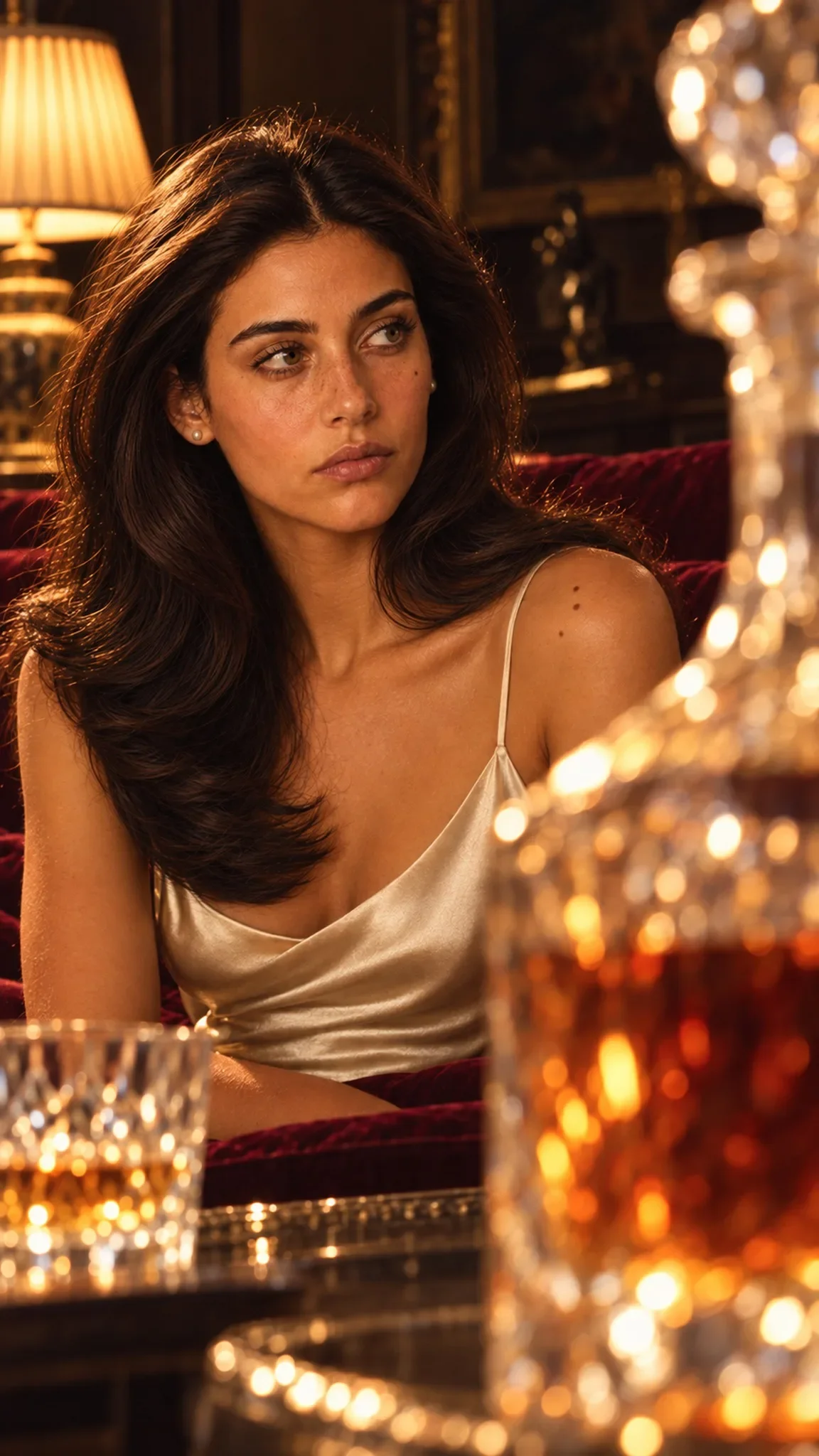
In our tests, the hair and make-up carried the era more than the grade did. A modern face under a warm grade reads as a filter, not a period portrait. A correct grade does not rescue a shot whose face reads as current.
We write the details that date a face into the prompt. Teeth are natural off-white. Skin is matte powder, which is the 90s finish we use. Lips are brown liner. The pre-flight check treats teeth, brows, lips, lashes and nails as period markers for the same reason: each one can betray the decade on its own.
The practical rule is to decide the face before the grade. If the hair and make-up are wrong, no amount of post work turns the shot into a period portrait, so the grade is the last thing we adjust, not the first.
Grain belongs in post, not in the prompt
The model is asked for one line of grain: 'fine, even film grain, faces stay crisp' and nothing more. The real grain is added in post, at about 2 to 3 percent of the frame, sized 2 px for L1.
The reason is the re-roll. A mushy face forces a re-roll of the whole clip, and at 720p that costs about $0.46 per second. Asking the model for heavy grain is how a face goes soft, so the prompt keeps faces crisp and the post step carries the texture.
For L1 the post grain is the Kodak 500T (5279) Add Grain preset from our After Effects install, with size at 2 px, chroma at 0.15 and shadow cut at 0.4. The install carries 13 film-stock presets.
We describe the stock in the prompt rather than naming it. In one A/B on the same shot, '500-speed tungsten-balanced colour negative' and 'Kodak Vision3 500T' produced the same grade, grain and skin, and the differences were take-to-take noise. That is one shot, so read it as a lead, not a rule.
Halation: halve the post value when the model already glows
Halation and bloom are post steps in our pipeline. The L1 starting values are a halation threshold of 0.80, a radius of 18 to 28 px and an intensity of 0.25 to 0.35. The bloom threshold is 0.70.
The control rule depends on what the model already renders. When the model already renders glow, we halve the post value. Doubling it is how an episode turns into an Instagram filter, and that is the failure the rule exists to prevent.
These numbers are judged by eye on a phone. They are a place to start on each shot, not a calibrated setting. The practical test is the same frame before and after the halation pass, viewed at phone size.
Vertical frame, horizontal lens character
9:16 has no anamorphic frame, so a vertical clip cannot carry an anamorphic squeeze. We keep the lens character another way, through oval out-of-focus highlights and horizontal streak flares off practical lights. Those are the marks a period lens leaves in the image, and they survive the vertical crop.
Never ask for widescreen or letterbox bars. They may be baked into the frame, and a bar that is baked in cannot be removed later in the edit.
The frame stays a vertical 9:16 image with period optics, not a cropped widescreen still with a 90s grade on top. The composition is built for the phone screen from the start.
Check the still before any video is paid for
Our pre-flight anachronism check runs against the still before any video is generated. It scans for phones, screens, LED light, car badges, readable text, teeth, brows, lips, lashes and nails. Each item on that list is something a period frame cannot show.
Fixing the still costs cents; fixing the clip costs dollars. A flaw caught on the still means one image is regenerated or edited. A flaw caught after the video is generated means the whole clip is paid for again.
The check comes before the grain and the halation, not after them. A period grade over a phone on the nightstand is still a phone, and the grade cannot remove it.
The order we work in is fixed. Name the period objects and ban the modern ones. Write the hair, make-up and skin. Ask the model for clean faces and nothing more. Run the anachronism check on the still. Only then add grain, halation and bloom in post, and judge the result by eye on a phone.