
A 70-second vertical wildlife film, end-to-end AI-crafted. A hummingbird hawk-moth hovers at a bank of garden flowers — wings a blur no eye can resolve, held still only by the lens. Broadcast-grade lower-thirds name what the camera is seeing, frame by frame, while a permanent Leica and BBC Earth bug anchor the corner. See what speed hides — the world between frames.
This is a concept spec piece — an imaginary broadcast collaboration produced to show what an OMNI Labs macro nature film looks like end to end. No lens, no garden, no crew. Every wingbeat, every pollen grain, every iridescent vein in that translucent wing was generated, not filmed — then directed like a real natural-history segment: species cards, a consistent on-screen information system, and a closing brand card that plays it straight, the way a real broadcast credit would.
The craft is in the restraint. The image-to-video was produced on an inexpensive AI video pipeline and finished with a 2× local upscale — deliberately cheap, because the direction is where the budget actually goes. A kinetic broadcast-UI layer holds identity and framing steady across the cut; a cinematic narrator reads the moth's Latin cue and a fictional "Leica 35mm APO-Summicron" credit line in the same breath a real wildlife documentary would; and underneath it all, a layered mix — a scored bed, a garden's worth of ambience, and the voiceover ducked cleanly above both — does the quiet work of making a generated reel feel like it was actually recorded somewhere.
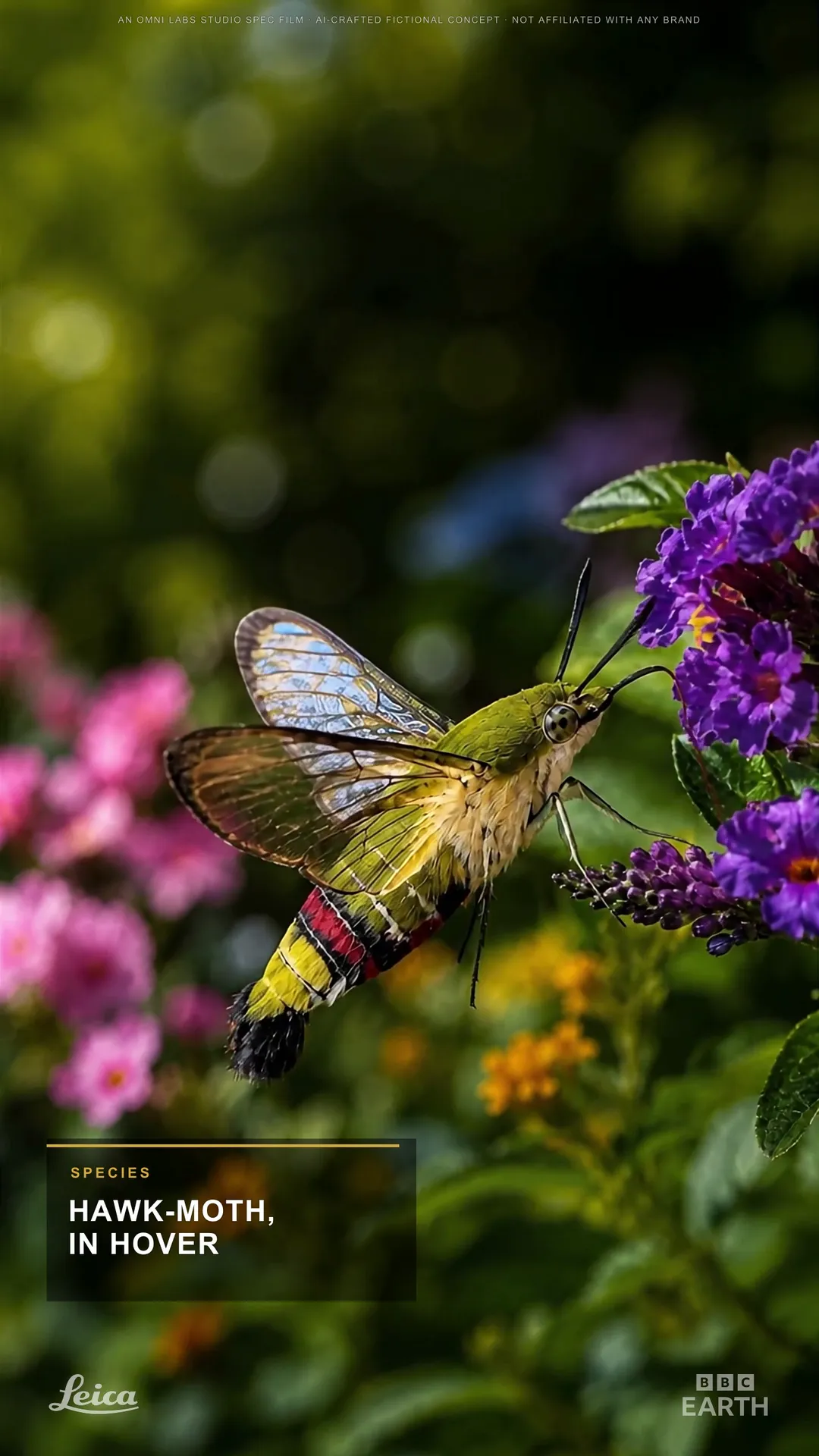
The Hover, Held Steady
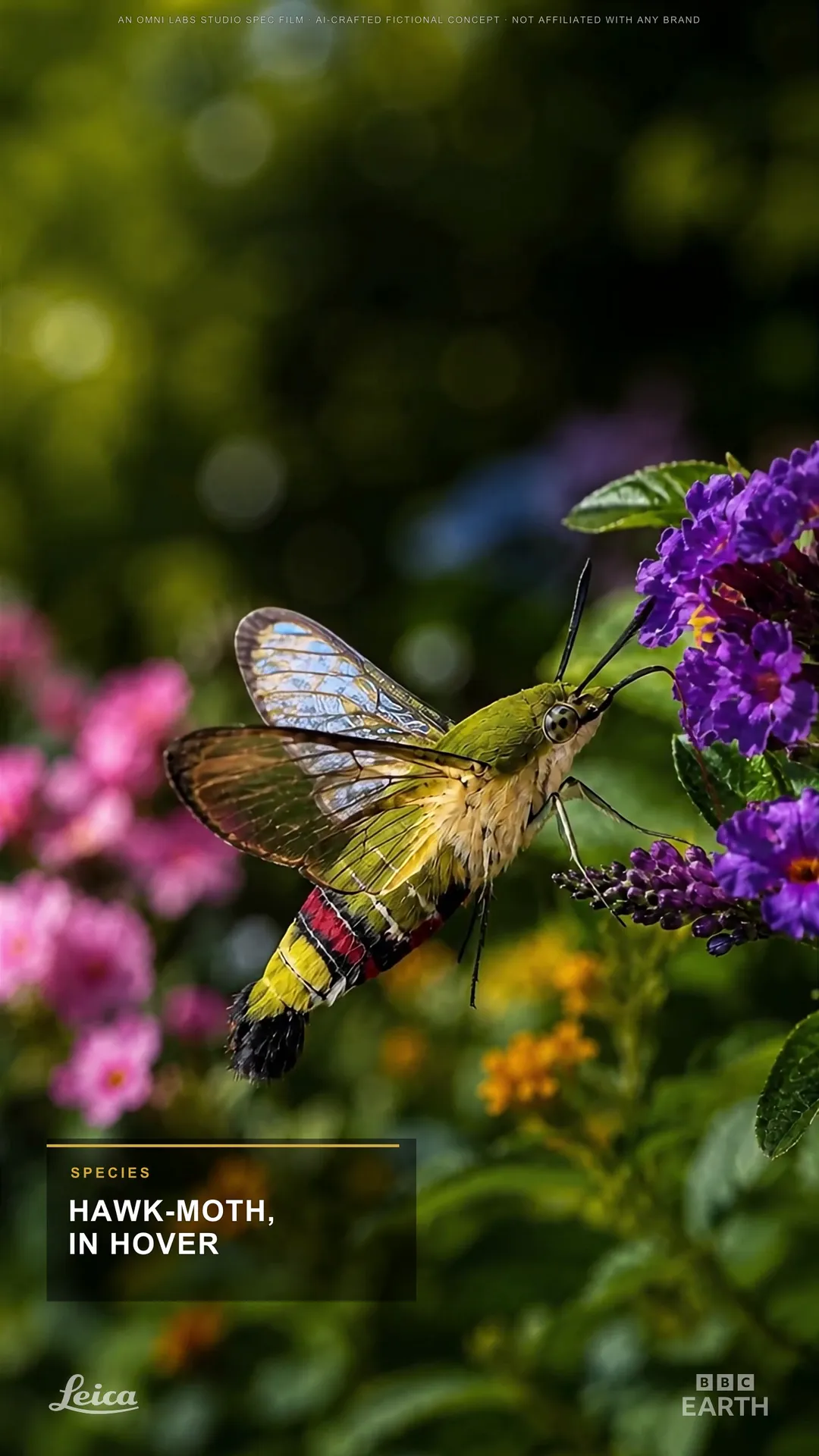
A hummingbird hawk-moth in hover is one of the hardest things a camera can hold: wingbeats too fast for the eye, a body that never stops correcting for wind. The film opens on exactly that — a species card names the shot while the moth's whole body, wings included, holds identity across the frame instead of dissolving into motion blur.
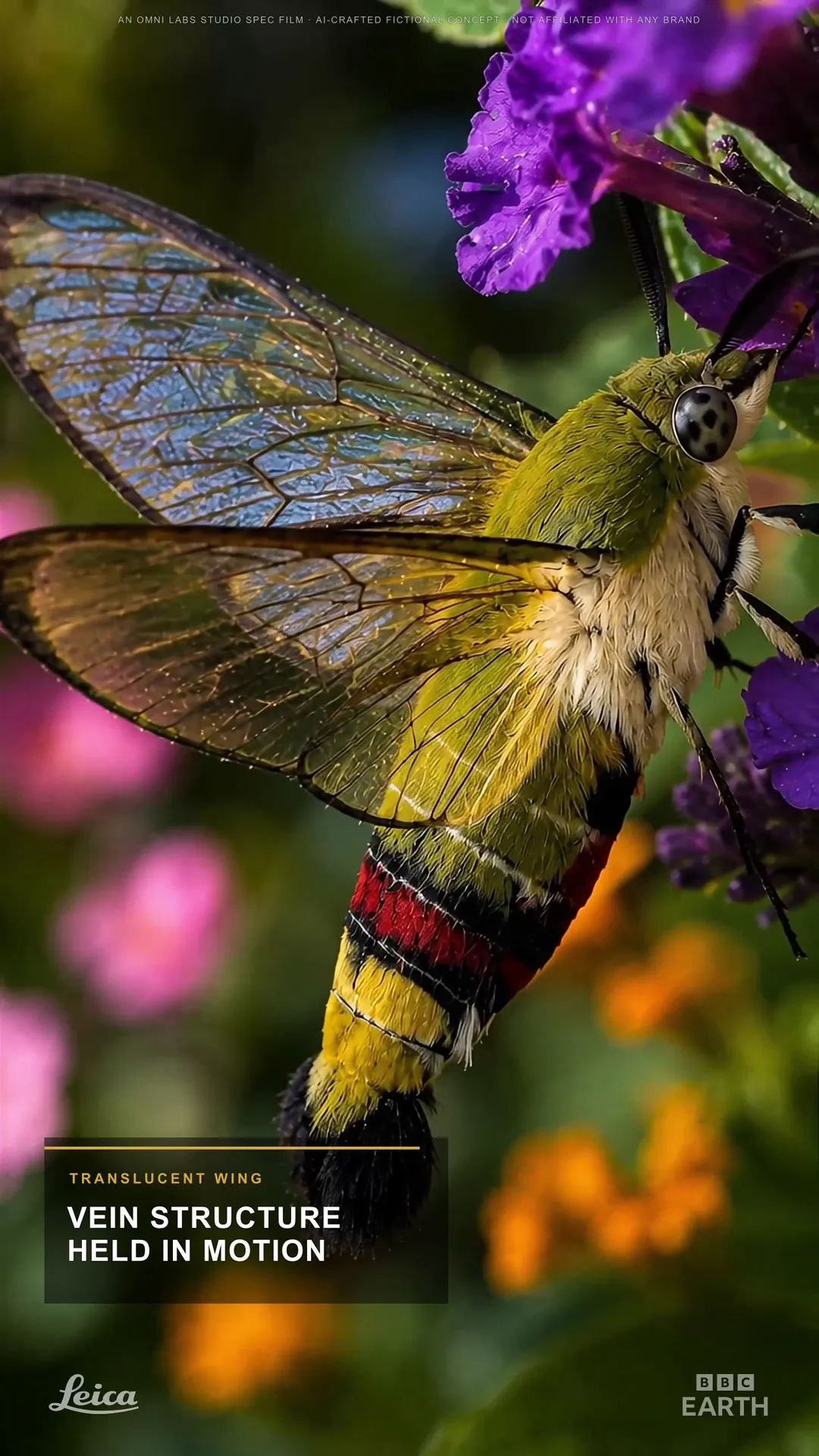
Detail Is Not Added. It Is Revealed.
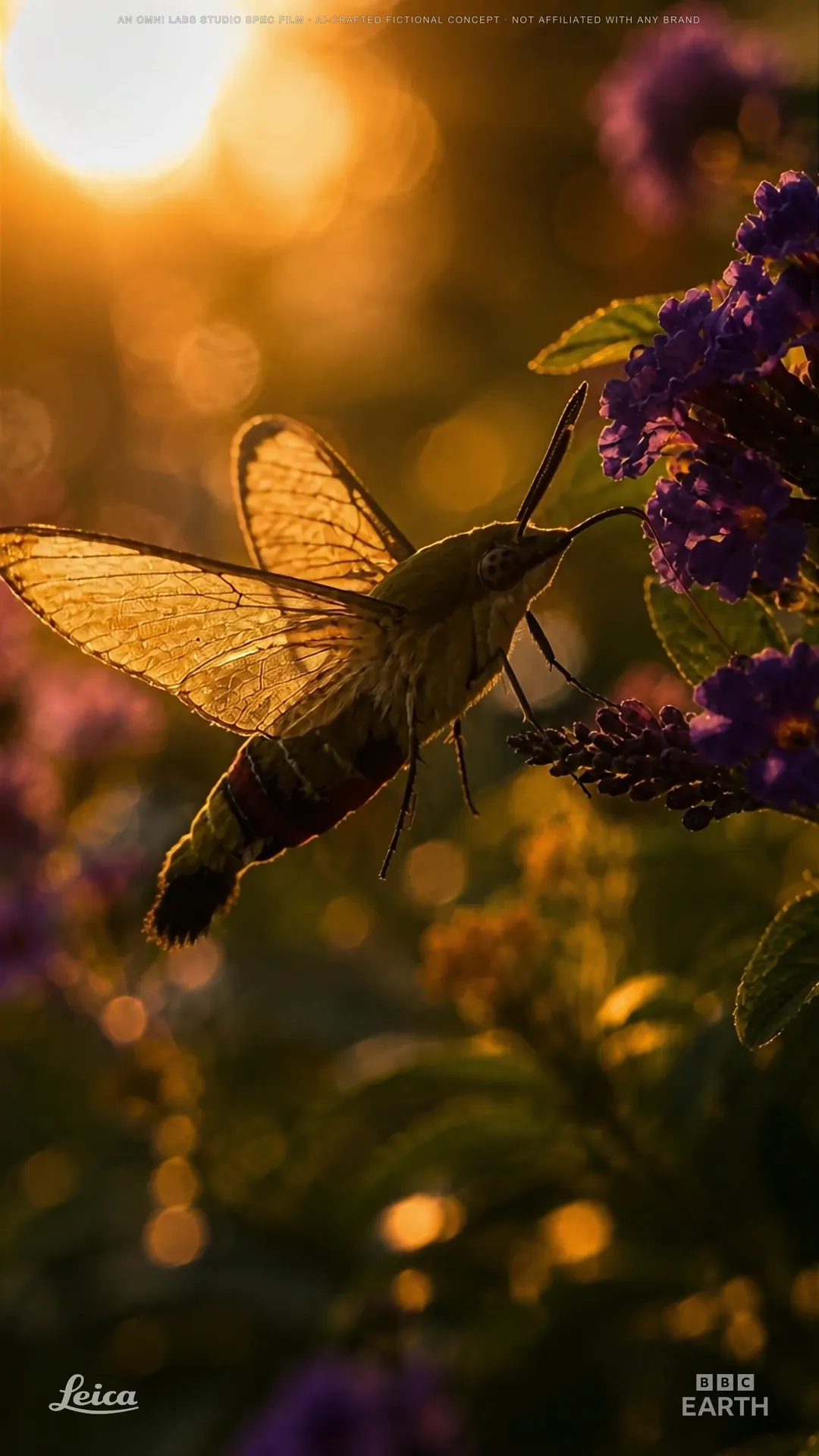
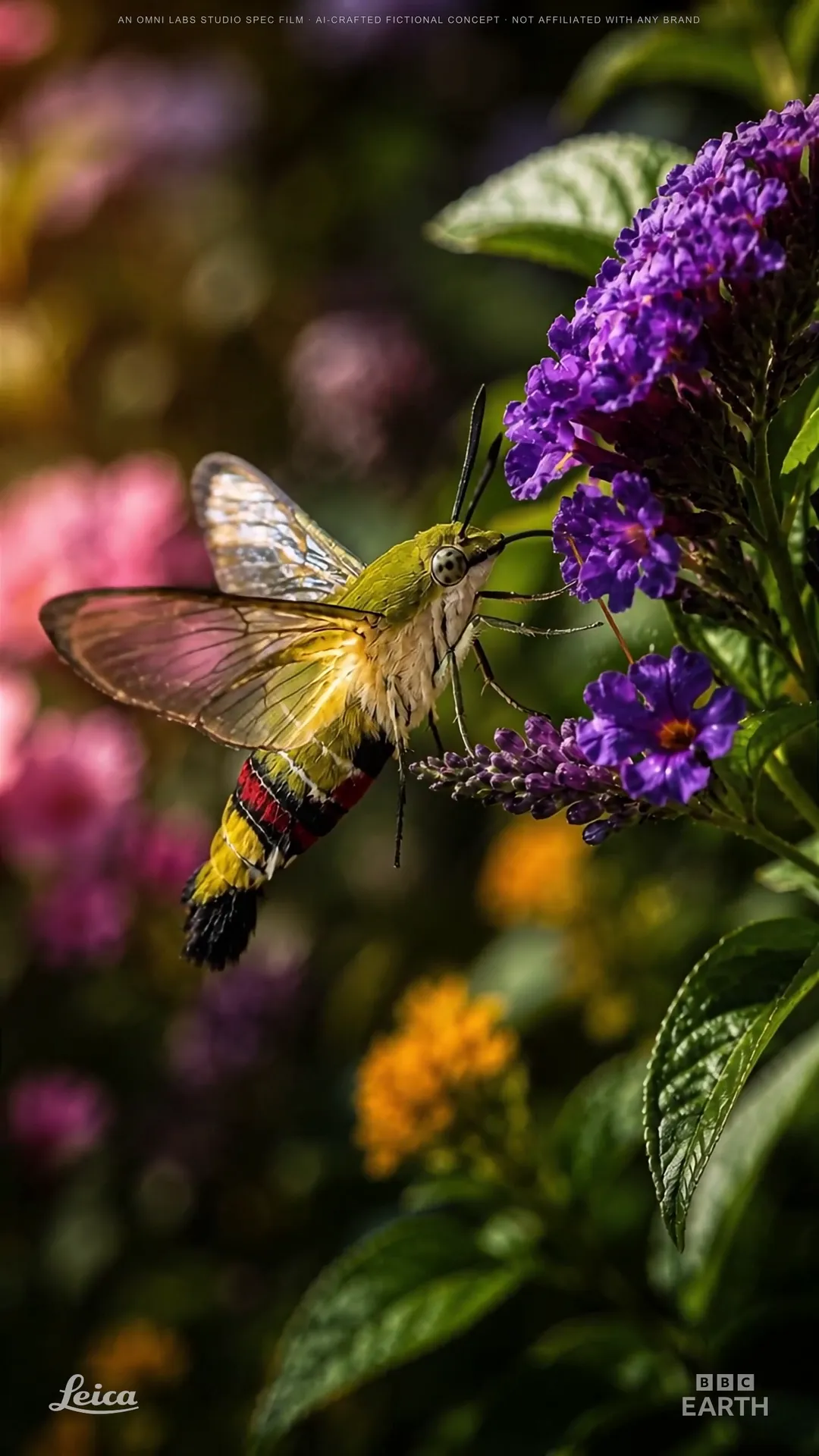
The film's thesis, stated in its own lower-third: every translucent wing pane, every vein, every dusting of pollen was already there in the generation — the macro lens doesn't invent detail, it uncovers what speed normally hides. That's the positioning this whole piece is built to prove.
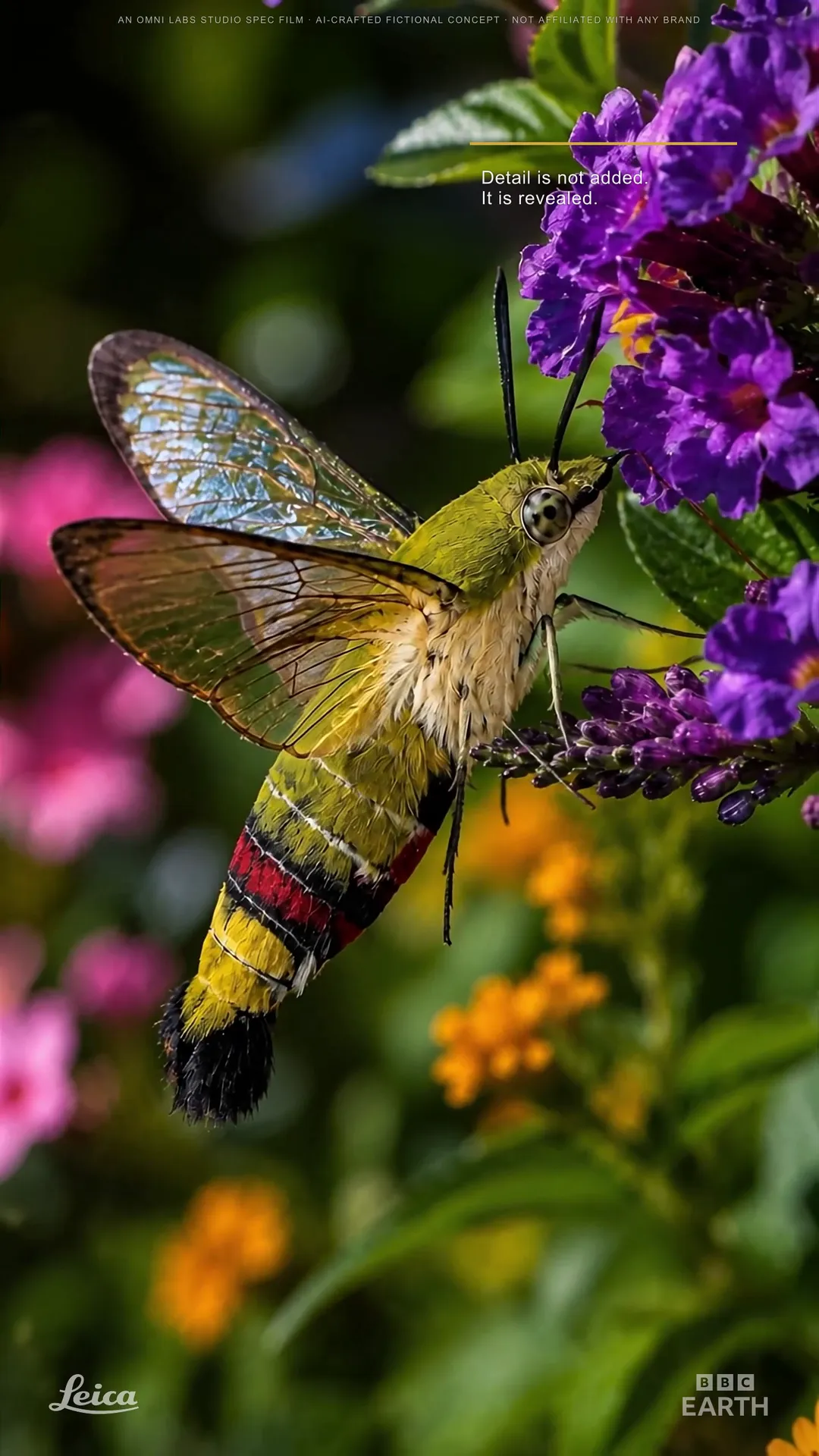
A Permanent Broadcast Identity
Unlike a social reel, this film never drops its on-screen information system: a quiet Leica mark bottom-left, a BBC Earth bug bottom-right, and a disclaimer running the full length of the top edge. The lower-third cards land and clear like a real natural-history segment — never louder than the subject.
Her Voice, and the Room Around It
A cinematic narrator carries the film in a single unbroken read, naming the fictional "Leica 35mm APO-Summicron" the way a real product-partnership documentary would credit its glass. Underneath her, a scored bed and a full garden's ambience are mixed and ducked against the voice — built last, against a locked picture, so sound and image land together.
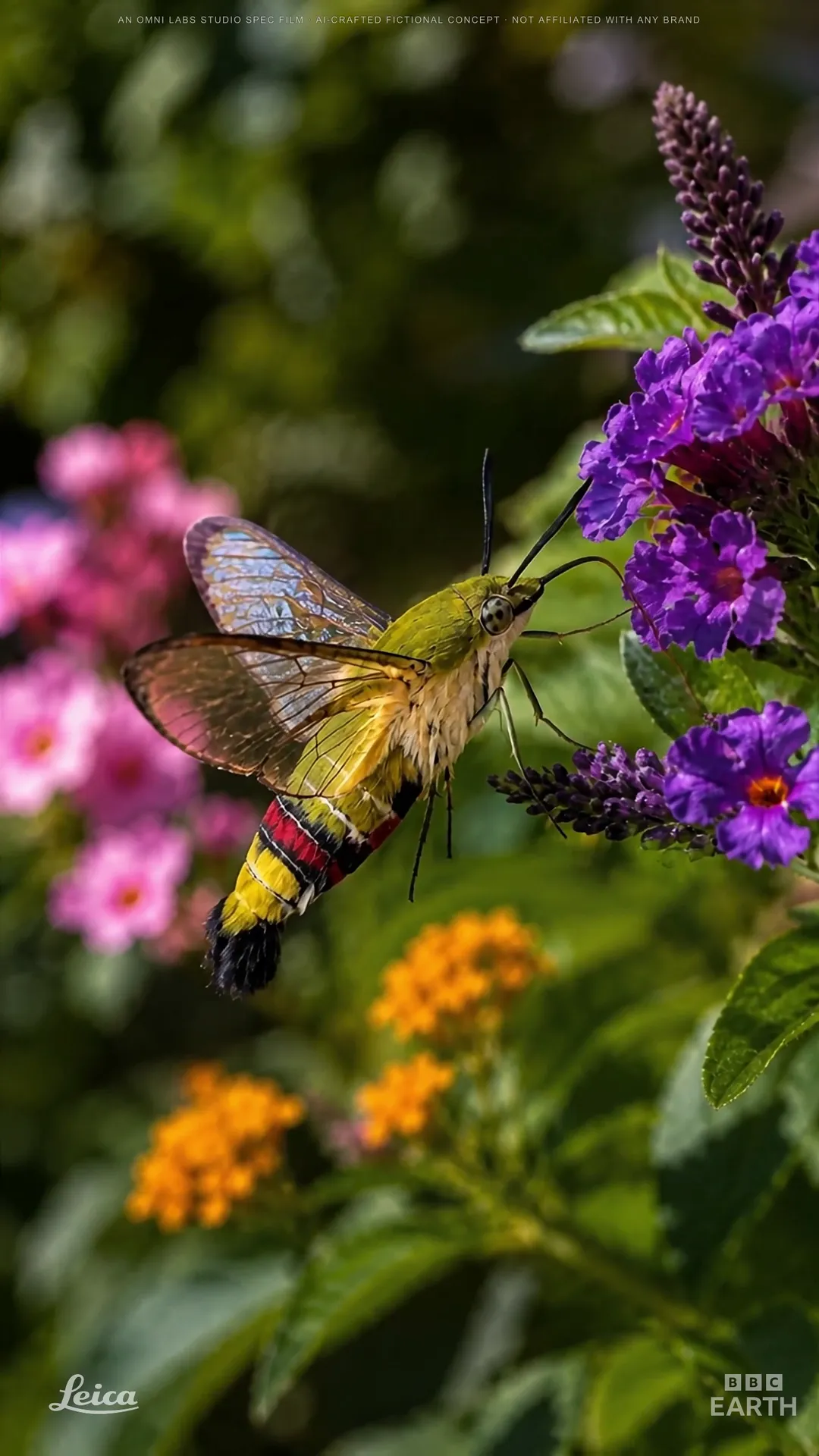
The Brand Card, Played Straight
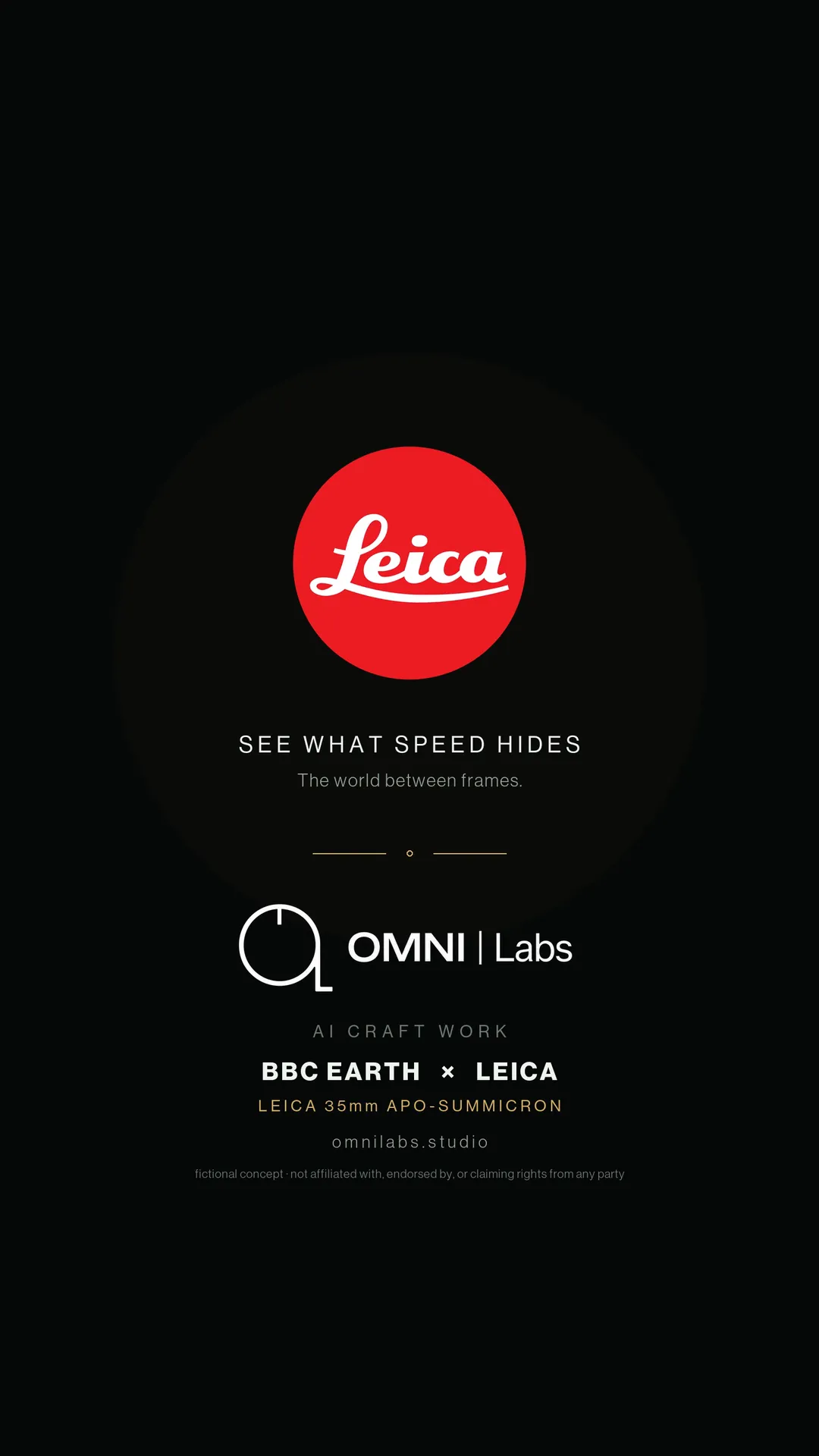
The film closes the way a real broadcast partnership would: the Leica mark, the line "See what speed hides," and a clean Leica × BBC Earth co-sign under the OMNI Labs credit. No wink, no reveal — the spec piece is played entirely straight, because that restraint is the pitch.